Wax Melts
Non-toxic wax melts, and what that claim is worth
The FTC says a non-toxic claim needs scientific evidence behind it. Almost nothing in this category comes with any, so the only honest ranking is by what each maker is willing to put in writing.

Disclosure — we earn a commission if you buy through the links on this page, at no extra cost to you. It does not change which products we pick or what we say about them. We accept no samples and no sponsorship. How this site is funded.
The short answer
"Non-toxic" is a claim with a legal test behind it, not a description. The FTC's Green Guides state that marketers claiming a product is non-toxic "need competent and reliable scientific evidence that the product is safe for both people and the environment". No wax melt brand we index publishes that evidence. So the honest ranking is not which melt is non-toxic - it is which maker discloses what is in the wax at all, and on that measure the field is thin.
Quick picks
| # | Product | Best for | Price |
|---|---|---|---|
| 01 |  Shortie's Soy Bar The only melt here whose listing states the wax, the fragrance carrier and three separate exclusions - which is as close to an ingredient label as this category gets. | Best disclosed composition | |
| 02 |  Happy Wax Soy Melts The only melt brand here that publishes an hours figure for every pack size AND a dosing rule, which together make cost per hour of fragrance calculable rather than guessable. | Best overall | |
| 03 | 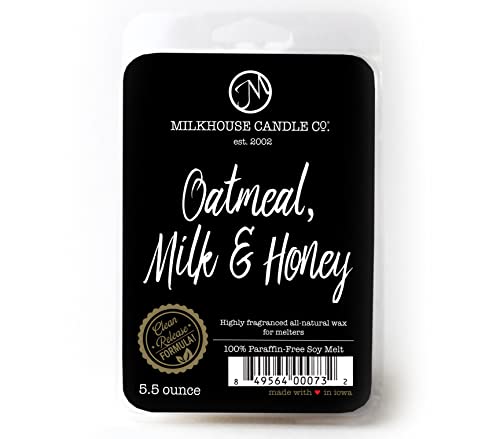 Milkhouse Soy Melts The heaviest pack here by some distance, 5.5 oz in six cubes against 2.6 oz in six from Yankee, which changes the price-per-ounce arithmetic completely. | Most wax per pack |
#ad Prices come from the live data layer and are stamped with the date they were checked. Where no live price exists the button says "Check price" rather than showing an old number. How we are funded.
What the claim actually requires
This is worth knowing before you shop, because it reframes the entire shelf.
The FTC Green Guides govern environmental marketing claims in the US. On non-toxic, the summary is direct: marketers "need competent and reliable scientific evidence that the product is safe for both people and the environment". That is a testing standard, not an adjective.
The guidance on "free-of" claims is even more useful for reading a wax melt label. The FTC says a free-of claim is permissible when the product has no more than trace amounts of the substance, the amount present causes no harm consumers associate with it, and the substance was not added intentionally. It also flags two ways a literally true free-of claim still misleads: when the product contains a different substance posing similar risks, and when the substance was never associated with that product category anyway.
That last one is the single most useful sentence for this shelf. A pack boasting it is free of something that was never in wax melts to begin with has told you nothing, and the FTC says so.
How we ranked these
We have not tested anything. Nobody publishes independent testing on wax melt emissions, and inventing some would be worse than saying so - our methodology sets out the limits.
So the ranking is built on disclosure, in this order:
- Does the maker state the wax? Soy, paraffin, coconut, a blend. This is the base ingredient and most brands never say.
- Does it state anything about the fragrance? The fragrance oil, not the wax, is where the interesting chemistry is.
- Where is it published? A composition statement on the maker's own site outranks the same words in a retail listing, because it is harder to change quietly.
- Are the exclusions specific? "Phthalate-free and paraffin-free" is checkable. "Clean" and "natural" are not claims at all.
Note what is not in that list: any judgment about whether one of these is safer to breathe than another. We cannot make that call from published data and we are not going to imply it.
What each brand actually publishes
| Melt | Wax stated? | Fragrance stated? | Where |
|---|---|---|---|
| Shortie's soy bar | 100% soy | Essential fragrance oils; phthalate-free, paraffin-free, vegan | Retail listing |
| Happy Wax | All natural soy | Paraben-, paraffin- and phthalate-free | Maker's own FAQ |
| Milkhouse | Soy with beeswax | Not stated | Maker's product page |
| Yankee Candle | Not published | Not published | - |
| Glade | Not published | Not published | - |
| ScentSationals | Not published | Scent described only | - |
Three of six say something. Three say nothing. That distribution is the real finding on this page, and it is why we rank on disclosure rather than on a safety claim we cannot verify.
The number none of them publish
Fragrance load - the percentage of fragrance oil in the wax - is the number that would let you compare these products on the thing people actually care about. Nobody publishes it. Not the brands that disclose their wax, not the ones that do not.
That matters here more than on any other page, because the wax is mostly inert and the fragrance is the part doing the work in the air. A pack can be 100% soy, vegan, phthalate-free and still be carrying a fragrance load nobody will quantify for you. Those two facts are not in tension - they are just about different ingredients.
What is actually known about what a warmed melt puts into a room, and what genuinely is not known, is on do wax melts release toxins. The short version: warming is not burning, so the combustion research about candles does not transfer, and the long-term question about warmed fragrance is unsettled rather than resolved in either direction.
Soy is a different question from non-toxic
These two get merged constantly, usually by people selling soy, and they are separate.
Soy versus paraffin is a question about the carrier: melting point, throw character, how the wax behaves in the dish. In a warmer neither is burned, so the combustion argument that drives most soy marketing does not apply at all - the full version is on soy vs paraffin.
"Non-toxic" is a claim about safety that, under the FTC test, requires evidence about the whole product. A soy melt with an undisclosed fragrance oil has not answered it. A paraffin melt is not automatically failing it. The wax type is simply not the variable that settles the question.
How to read a wax melt label in thirty seconds
There is a fast way through this shelf that does not require trusting anybody. Read in this order and most packs answer themselves.
- Find the wax. Soy, paraffin, coconut, beeswax or a blend. If the pack does not say, you have learned the most important thing about that maker: it does not disclose. Move on unless the price is the reason you picked it up.
- Find the fragrance. Almost nobody names it. What you are looking for is whether the words "essential oil" or "fragrance oil" appear at all, because in a house with a cat those are not interchangeable.
- Read the exclusions as a list, not a mood. Phthalate-free and paraffin-free are specific and checkable. Clean, pure, natural and eco are not claims - they are adjectives with no test behind them.
- Check where the claim lives. A composition statement on the maker's own site is worth more than the same words in a retail listing, because a listing can be edited by whoever owns the storefront.
- Ignore the seal unless you can name the issuer. If a graphic implies certification and no organization is named, it is artwork.
That order matters. People usually start at step three, which is the step most designed to be read and least likely to tell them anything.
What actually reaches the room
A warmed melt does two things: it releases the fragrance compounds that were dissolved in the wax, and it does not burn. Both halves matter to this question and people tend to hold only one of them at a time.
Not burning is a genuine difference. There is no flame, no wick and no combustion, so the soot and incomplete-combustion products that dominate scented candle research are not produced. That is why we say candle research does not transfer onto melts, in either direction.
Releasing fragrance is not nothing. Warmed fragrance puts volatile organic compounds into indoor air - that is the mechanism by which you smell it at all. Whether sustained daily exposure to warmed fragrance matters over years is not settled, and we are not going to pretend it is in either direction. The long version, including what the research does and does not cover, is on do wax melts release toxins.
The practical response that follows from an unsettled question is unglamorous and cheap: use less wax, ventilate, and do not run a warmer continuously in a small closed room. One cube in a ventilated room is a materially different exposure from three cubes in a sealed bedroom overnight, whatever the pack says about itself.
What we do not recommend
Buying on the word "clean". It has no definition, no test and no regulator behind it. It is the least informative word on this shelf and it commands a premium.
Buying on a free-of list that names things wax melts never contained. The FTC explicitly flags this pattern. If a claim is impressive only because you had not considered the substance, it is doing marketing work rather than informing you.
Assuming "natural" means anything about inhalation. Natural describes where a material came from, not what it does in a room or in a small animal. The same point comes up harder on wax melts and cats.
Paying a premium for a certification seal you cannot look up. If the seal has no issuing body you can find, it is a graphic.
The picks in full
Best disclosed composition
Shortie's Candle Company Vanilla Bean Natural Soy Wax Melts
The only melt here whose listing states the wax, the fragrance carrier and three separate exclusions - which is as close to an ingredient label as this category gets.
First on disclosure alone: its listing states the wax, the fragrance carrier and three specific exclusions. That is more than anyone else here writes down.
- A 3 oz bar you snap yourself rather than pre-formed cubes, so dosing is by eye rather than by cube.
- 100% soy melts at a lower temperature than paraffin: gentler opening, longer tail, and it will underperform a paraffin blend in a cold drafty room.
- Phthalate-free, paraffin-free and vegan are the seller's claims. Nobody independently tests these, and we are quoting rather than confirming.
Skip this if
You want a multi-scent pack. This is one 3 oz bar of one fragrance, so finding what you like gets expensive.
- Wax
- 100% soy with essential fragrance oils; stated phthalate-free, paraffin-free, vegan Shortie's listing (retailer listing, checked 2026-09-13)The most composition detail any melt in this registry publishes, and it is still a marketing claim rather than a tested disclosure.
- Pack size
- One 3 oz bar Shortie's listing (retailer listing, checked 2026-09-13)
- Stated hours
- Not published
- Cube size
- Not published
- Made in
- Not published
Published specifications
Shortie's Candle Company
Shortie's Soy Bar
#ad Price as of September 13, 2026. How we are funded
Best overall
Happy Wax Scented Natural Soy Wax Melts
The only melt brand here that publishes an hours figure for every pack size AND a dosing rule, which together make cost per hour of fragrance calculable rather than guessable.
The only brand publishing a composition statement on its own website rather than only in a retail listing, which is a meaningfully harder thing to walk back.
- The published numbers are internally consistent across all three sizes at about 30 hours of stated scent time per ounce of wax, which is the sort of consistency you want from a spec sheet.
- The dosing guidance is unusually specific: 1 to 2 shapes in an outlet or mini warmer, 2 to 3 in a standard one, 5 to 8 in the largest. Most brands say one or two cubes and stop.
- Soy melts at a lower temperature than paraffin, which means a gentler, longer throw rather than a hard opening burst. That is a real difference in character, not a marketing line.
- The pack our buy link resolves to is the 6 oz variety pouch. The pack sizes above are the three Happy Wax publishes for the line, and the price you see is for the pouch actually in stock.
Skip this if
You want a supermarket price. Soy melts from a named US maker cost more per ounce than a paraffin blend, and no amount of scent throw closes that gap.
- Wax
- All natural soy; paraben-, paraffin- and phthalate-free Happy Wax wax melt FAQ (manufacturer, checked 2026-09-02)Happy Wax states its melts are made with all natural soy wax and are proudly paraben, paraffin and phthalate-free.
- Pack size
- 2 oz / about 16 shapes; 4 oz / about 30; 8 oz / about 60 Happy Wax wax melt FAQ (manufacturer, checked 2026-09-02)
- Stated hours
- About 60 h (2 oz), 120 h (4 oz), 240 h (8 oz) Happy Wax wax melt FAQ (manufacturer, checked 2026-09-02)Happy Wax also publishes a dosing rule: typically melt 2 shapes at a time for 8 hours of scent time.
- Cube size
- Not published
- Made in
- Hillsborough, North Carolina Happy Wax wax melt FAQ (manufacturer, checked 2026-09-02)
Published specifications
Happy Wax
Happy Wax Soy Melts
#ad Price as of September 13, 2026. How we are funded
Most wax per pack
Milkhouse Candle Company Soy Wax Melts
The heaviest pack here by some distance, 5.5 oz in six cubes against 2.6 oz in six from Yankee, which changes the price-per-ounce arithmetic completely.
States soy and beeswax on the maker's own product page. Less detail than the two above, from a maker that has been publishing it longer.
- 0.9 oz a cube against Yankee's 0.43 oz. You are not comparing like with like when you compare six-cube packs across brands, and this pair proves it.
- Soy blended with beeswax rather than straight soy. Beeswax raises the melt point, so it wants a warmer that gets properly hot rather than a gentle bulb.
- Milkhouse does not publish an hours figure. On a pack this size that is a genuine omission, and it is why this is not our longest-lasting pick despite having the most wax.
Skip this if
Your warmer has a small dish. A 5.5 oz six-cube bar is roughly 0.9 oz a cube, and that will overflow a plug-in.
- Wax
- Paraffin-free soy blended with beeswax Milkhouse Candle Company product page (manufacturer, checked 2026-09-02)
- Pack size
- 5.5 oz, 6 breakaway cubes Milkhouse listing (retailer listing, checked 2026-09-02)
- Stated hours
- Not published
- Cube size
- Not published
- Made in
- Made in the USA Milkhouse listing (retailer listing, checked 2026-09-02)
Published specifications
Milkhouse Candle Company
Milkhouse Soy Melts
#ad Price as of September 13, 2026. How we are funded
Questions people actually ask
Are any wax melts actually non-toxic?
None that we index publish the evidence the claim requires. The FTC Green Guides say a marketer claiming non-toxic needs competent and reliable scientific evidence that the product is safe for people and the environment; no wax melt brand here publishes testing to that standard. Several publish what the wax is, which is useful and is a different thing.
What does phthalate-free mean on a wax melt?
It means the maker says no phthalates were intentionally added. Under the FTC's free-of guidance that claim is fair when the product has no more than trace amounts, the amount present causes no associated harm, and the substance was not added on purpose. It tells you nothing about the rest of the fragrance oil, which is not disclosed by anyone.
Is soy wax non-toxic?
Soy is a wax, and the non-toxic question is about the whole product - overwhelmingly the fragrance rather than the carrier. A 100% soy melt with an undisclosed fragrance oil has not answered it. Soy versus paraffin is a real difference in melting behavior and throw character, and in a warmer neither one is burned.
Which wax melt brand discloses the most?
Of the melts we index, Shortie's states the most in one place - 100% soy, essential fragrance oils, and phthalate-free, paraffin-free and vegan - although it does so in a retail listing. Happy Wax publishes its all-natural soy composition on its own website, which is a harder place to change quietly. Milkhouse states soy with beeswax on its product page.
Are wax melts safer than candles?
On combustion specifically, yes - nothing is burned in a warmer, so soot and incomplete-combustion products are not produced. On the fragrance itself the two are much closer, because both put volatile organic compounds into the air. That is a real advantage on one axis rather than a clean bill of health.
Sources
Every factual claim on this page traces to one of these, or is labeled as an assumption. We have not tested these products - our method is on the methodology page.
- Environmental Claims: Summary of the Green Guides - non-toxic and free-of claims — U.S. Federal Trade Commission. Retrieved September 13, 2026.
- Wax Melt FAQ — Happy Wax. Retrieved September 2, 2026.
- Oatmeal Milk and Honey Soy Wax Melts — Milkhouse Candle Company. Retrieved September 2, 2026.
Read next

Safety
Do wax melts release toxins?
What is established, what is candle research misapplied, and what remains genuinely unknown - with the uncertainty stated rather than resolved.

Wax Melts
Soy vs paraffin wax melts
Melt point, throw character, cost and cleanup compared - plus an honest account of where the emissions evidence actually stands.

Wax Melts
The best wax melt brands, ranked on what they are willing to tell you
Brands compared on documentation: who publishes wax type, hours and dosing, who publishes nothing, and where each is actually purchasable.
Safety
Pet-safe wax melts
There is no pet-safe certification. What the veterinary sources say, how cats, dogs and birds differ, and how to choose on disclosure instead of on a label.
Wax Melts
The best wax melts, ranked on what the pack actually tells you
Wax melts ranked on published wax type, weight per cube and stated hours, with the source next to every number.
Safety
Are wax melts safe?
The cluster head: fire risk, pets, children and air quality answered separately, with authorities named and the uncertainty stated.