Safety
Pet-safe wax melts
The phrase is on plenty of labels and behind none of them is a test, a standard or an issuing body. Here is what is actually known, species by species.
Disclosure — we earn a commission if you buy through the links on this page, at no extra cost to you. It does not change which products we pick or what we say about them. We accept no samples and no sponsorship. How this site is funded.
The short answer
No wax melt sold in the US is certified pet-safe, because no certification exists. The phrase on a listing is marketing, and under the FTC's Green Guides even a literally true "free-of" claim can mislead. What is documented is narrower and more useful: Pet Poison Helpline and VCA publish specific warnings about essential oils and cats, and VCA is blunt that for birds, if you can smell it, it may harm them. Dogs sit somewhere less alarming and less studied.
Quick picks
| # | Product | Best for | Price |
|---|---|---|---|
| 01 |  Shortie's Soy Bar The only melt here whose listing states the wax, the fragrance carrier and three separate exclusions - which is as close to an ingredient label as this category gets. | Best disclosed composition | |
| 02 |  Happy Wax Soy Melts The only melt brand here that publishes an hours figure for every pack size AND a dosing rule, which together make cost per hour of fragrance calculable rather than guessable. | Best overall | |
| 03 | 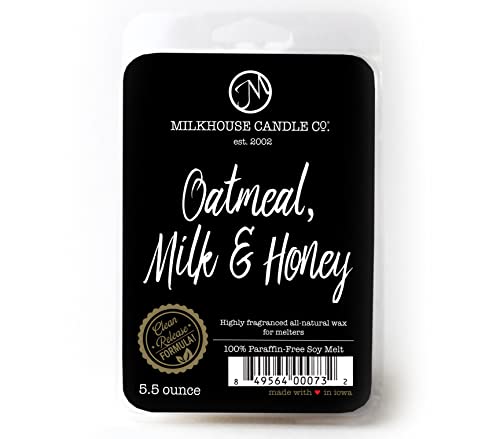 Milkhouse Soy Melts The heaviest pack here by some distance, 5.5 oz in six cubes against 2.6 oz in six from Yankee, which changes the price-per-ounce arithmetic completely. | Most wax per pack |
#ad Prices come from the live data layer and are stamped with the date they were checked. Where no live price exists the button says "Check price" rather than showing an old number. How we are funded.
There is no certification behind the phrase
Start here, because it changes how you read every product in this category.
There is no US standard, testing protocol or issuing body for "pet-safe" home fragrance. Compare that with UL or ETL on a warmer, where you can name the lab. A listing that says pet-safe is making a claim about itself.
The FTC Green Guides are relevant even though they are written for environmental claims, because the same pattern applies: a "free-of" claim can be literally true and still deceptive when the product contains something posing similar risks, or when the named substance was never in that product category to begin with. A melt advertised as free of something wax melts never contained has told you nothing.
So the honest question is not "which melt is pet-safe". It is which maker tells you enough to make a decision with your vet, and that is what the picks on this page are ranked on.
Cats: the one with documented guidance
Cats are singled out in the veterinary literature for a real reason rather than an abundance of caution: they metabolize certain compounds differently from other household animals.
Pet Poison Helpline and VCA Animal Hospitals both publish specific material on essential oils and cats, and Pet Poison Helpline maintains a separate entry on liquid potpourri - which is the closest documented analogue to a dish of warmed fragrance.
What that does not establish is that a given wax melt harms a cat. Almost no melt publishes whether it contains essential oils at all, which is precisely the problem: you cannot check your product against the guidance. The full treatment, including the ingestion risk that has nothing to do with fragrance, is on wax melts and cats.
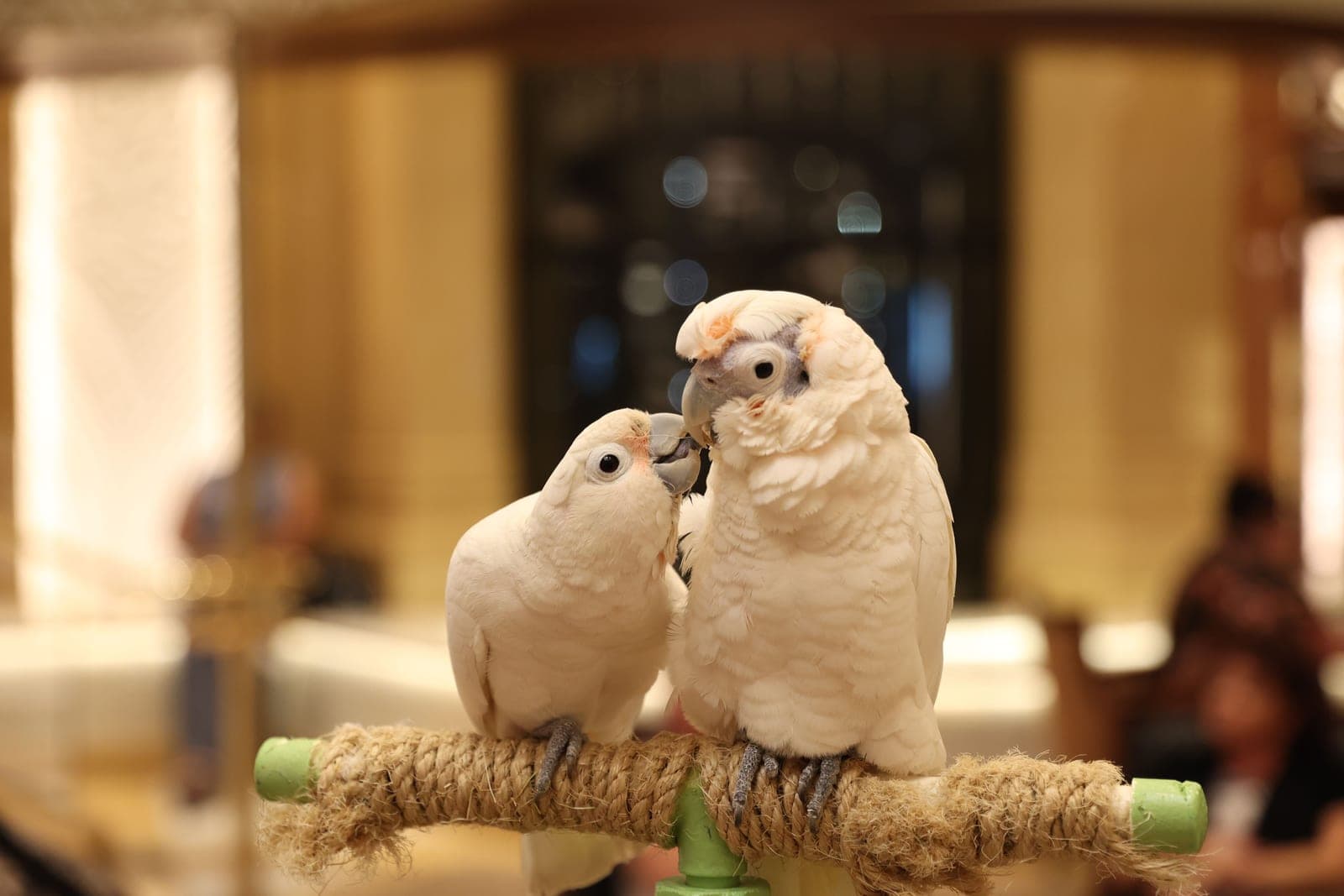
Birds: the answer is no
This is the one species where we tell readers not to buy the product at all, and the sourcing is unambiguous.
VCA publishes the rule plainly: "A good rule is that if you can smell it, it may harm your bird's respiratory tract." A wax melt exists to be smelled. There is no formulation, wax type or disclosure level that gets around that sentence.
There is a second, hardware-side risk most people miss: some warming plates carry non-stick coatings, and PTFE fumes are rapidly fatal to birds. The detail, and what to do if you keep birds and still want scent somewhere in the house, is on wax melts and birds.
Dogs: less alarming, less studied
Dogs do not carry the specific metabolic vulnerability that puts cats in the veterinary literature, and they are not built like birds. That makes the picture calmer - not blank.
The risks that are actually documented for dogs in this category are physical rather than chemical: a hot dish within reach, liquid wax that can be pulled down, and cubes that look and smell like food to an animal that eats first and considers later. Those are placement and storage problems with placement and storage solutions - wax melts and dogs has them.
If your dog has a diagnosed respiratory condition, that is a conversation for your vet rather than for a website, and the honest answer is that the evidence base you would want does not exist.
How to actually choose in a pet household
- Prefer a maker that publishes composition. Not because disclosed equals safe, but because it is the only version of this decision where you have something to show a vet. That is the entire basis of the ranking below.
- Treat essential-oil content as the thing to check, particularly with cats. A melt that says nothing about its fragrance has not told you it is free of them.
- Site the warmer out of reach and away from where the animal sleeps. Height helps scent throw and helps here too - where to put a warmer.
- Use less wax and ventilate. One cube, a door open, and a room the animal can leave. An animal that can walk away from a smell is in a much better position than one that cannot.
- Store cubes like food. They look like sweets to a dog and like a toy to a cat. A closed cupboard solves the ingestion risk entirely.
The hardware question, which nobody asks
Almost every page about pets and home fragrance is about the wax. In a house with animals, the warmer is at least as relevant and it is easier to get right.
- A dish of hot liquid wax is the realistic injury. Not a theoretical inhalation risk - a cat that jumps onto a side table or a dog that catches a cord. Height, a hard surface and distance from the edge solve it.
- Cords are the thing pets interact with. A trailing cord is a toy to a cat and a trip hazard to everyone. A plug-in warmer has no cord at all, which in a pet house is a genuine advantage over a corded plate.
- Non-stick coatings matter if there is a bird anywhere in the home. PTFE fumes are rapidly fatal to birds, and very few warmer listings state what the plate is coated with. In a bird household, treat an unstated coating as unknown.
- Cubes are the ingestion risk, not the warmer. They look like food and smell stronger than food. A closed cupboard removes that risk entirely, and it is the single easiest thing on this page to act on.
What the sources say to watch for
We are not a veterinary service and this is not a diagnostic list. What follows is what the published sources themselves flag, which is a narrower and more useful thing.
VCA notes for birds that signs of respiratory damage may not be immediate, and that smoke exposure can lead to chronic bronchitis and impair a bird's ability to fight off disease. Labored breathing, tail-bobbing or discharge are same-day reasons to call an avian vet.
For cats, Pet Poison Helpline and VCA publish the detail on essential oil exposure, including routes that have nothing to do with a warmer - skin contact and grooming after a spill among them. If a cat has been in contact with liquid fragrance rather than merely in the room, that is the situation their material is actually about.
The general principle we would apply in any of these cases: an animal that seems off after a change in the house is worth a phone call, and the fact that a product is sold for homes is not evidence about your animal. Take the pack with you - which is, again, why buying one that discloses its contents is worth more than buying one that promises safety.
What we do not recommend
Buying a melt because the listing says pet-safe. There is no body issuing that phrase. We deliberately do not link one of the several listings that lead with it, because featuring a product whose main selling point is an uncertifiable claim would undercut the point of this page.
Treating "natural" as reassurance. Essential oils are natural and are the compounds the cat guidance is actually about. Natural describes origin, not effect.
Running a warmer in a room a pet cannot leave. A closed bedroom, a crate area, a bathroom where the cat sleeps. Ventilation and an exit matter more than the brand on the pack.
Any wax melt at all in a room with a bird. That is the one unqualified no on this site.
The picks in full
Best disclosed composition
Shortie's Candle Company Vanilla Bean Natural Soy Wax Melts
The only melt here whose listing states the wax, the fragrance carrier and three separate exclusions - which is as close to an ingredient label as this category gets.
Ranked first for the only reason we can defend: its listing states the wax and the fragrance carrier, so there is something to check rather than a claim to trust.
- A 3 oz bar you snap yourself rather than pre-formed cubes, so dosing is by eye rather than by cube.
- 100% soy melts at a lower temperature than paraffin: gentler opening, longer tail, and it will underperform a paraffin blend in a cold drafty room.
- Phthalate-free, paraffin-free and vegan are the seller's claims. Nobody independently tests these, and we are quoting rather than confirming.
Skip this if
You want a multi-scent pack. This is one 3 oz bar of one fragrance, so finding what you like gets expensive.
- Wax
- 100% soy with essential fragrance oils; stated phthalate-free, paraffin-free, vegan Shortie's listing (retailer listing, checked 2026-09-13)The most composition detail any melt in this registry publishes, and it is still a marketing claim rather than a tested disclosure.
- Pack size
- One 3 oz bar Shortie's listing (retailer listing, checked 2026-09-13)
- Stated hours
- Not published
- Cube size
- Not published
- Made in
- Not published
Published specifications
Shortie's Candle Company
Shortie's Soy Bar
#ad Price as of September 13, 2026. How we are funded
Best overall
Happy Wax Scented Natural Soy Wax Melts
The only melt brand here that publishes an hours figure for every pack size AND a dosing rule, which together make cost per hour of fragrance calculable rather than guessable.
Publishes its composition on its own site. That does not make it safe around an animal - it makes it possible to have an informed conversation with a vet about it.
- The published numbers are internally consistent across all three sizes at about 30 hours of stated scent time per ounce of wax, which is the sort of consistency you want from a spec sheet.
- The dosing guidance is unusually specific: 1 to 2 shapes in an outlet or mini warmer, 2 to 3 in a standard one, 5 to 8 in the largest. Most brands say one or two cubes and stop.
- Soy melts at a lower temperature than paraffin, which means a gentler, longer throw rather than a hard opening burst. That is a real difference in character, not a marketing line.
- The pack our buy link resolves to is the 6 oz variety pouch. The pack sizes above are the three Happy Wax publishes for the line, and the price you see is for the pouch actually in stock.
Skip this if
You want a supermarket price. Soy melts from a named US maker cost more per ounce than a paraffin blend, and no amount of scent throw closes that gap.
- Wax
- All natural soy; paraben-, paraffin- and phthalate-free Happy Wax wax melt FAQ (manufacturer, checked 2026-09-02)Happy Wax states its melts are made with all natural soy wax and are proudly paraben, paraffin and phthalate-free.
- Pack size
- 2 oz / about 16 shapes; 4 oz / about 30; 8 oz / about 60 Happy Wax wax melt FAQ (manufacturer, checked 2026-09-02)
- Stated hours
- About 60 h (2 oz), 120 h (4 oz), 240 h (8 oz) Happy Wax wax melt FAQ (manufacturer, checked 2026-09-02)Happy Wax also publishes a dosing rule: typically melt 2 shapes at a time for 8 hours of scent time.
- Cube size
- Not published
- Made in
- Hillsborough, North Carolina Happy Wax wax melt FAQ (manufacturer, checked 2026-09-02)
Published specifications
Happy Wax
Happy Wax Soy Melts
#ad Price as of September 13, 2026. How we are funded
Most wax per pack
Milkhouse Candle Company Soy Wax Melts
The heaviest pack here by some distance, 5.5 oz in six cubes against 2.6 oz in six from Yankee, which changes the price-per-ounce arithmetic completely.
States soy with beeswax on the maker's product page and nothing about the fragrance, which is the norm rather than the exception here.
- 0.9 oz a cube against Yankee's 0.43 oz. You are not comparing like with like when you compare six-cube packs across brands, and this pair proves it.
- Soy blended with beeswax rather than straight soy. Beeswax raises the melt point, so it wants a warmer that gets properly hot rather than a gentle bulb.
- Milkhouse does not publish an hours figure. On a pack this size that is a genuine omission, and it is why this is not our longest-lasting pick despite having the most wax.
Skip this if
Your warmer has a small dish. A 5.5 oz six-cube bar is roughly 0.9 oz a cube, and that will overflow a plug-in.
- Wax
- Paraffin-free soy blended with beeswax Milkhouse Candle Company product page (manufacturer, checked 2026-09-02)
- Pack size
- 5.5 oz, 6 breakaway cubes Milkhouse listing (retailer listing, checked 2026-09-02)
- Stated hours
- Not published
- Cube size
- Not published
- Made in
- Made in the USA Milkhouse listing (retailer listing, checked 2026-09-02)
Published specifications
Milkhouse Candle Company
Milkhouse Soy Melts
#ad Price as of September 13, 2026. How we are funded
Questions people actually ask
Are there pet-safe wax melts?
Not in any certified sense - no US standard or issuing body exists for the phrase, so a listing saying pet-safe is making a claim about itself. What you can do is choose a maker that publishes what is in the wax and the fragrance, which gives you something concrete to check against veterinary guidance and to raise with your own vet.
Are wax melts safe for cats?
The documented guidance is about essential oils rather than wax melts specifically: Pet Poison Helpline and VCA both publish material on essential oils and cats, and Pet Poison Helpline has a separate entry on liquid potpourri. The practical problem is that almost no melt discloses whether it contains essential oils, so you often cannot check your product against that guidance.
Are wax melts safe for dogs?
Dogs do not carry the specific metabolic vulnerability that puts cats in the literature. The documented risks are physical: a hot dish in reach, liquid wax that can be pulled down, and cubes that look like food. Those are solved by placement and storage. A dog with a diagnosed respiratory condition is a question for your vet.
Can I use wax melts around birds?
No. VCA states that if you can smell it, it may harm your bird's respiratory tract, and a wax melt exists to be smelled. There is also a hardware risk - some warming plates carry non-stick coatings, and PTFE fumes are rapidly fatal to birds. This is the one case where our answer is simply not to use the product.
Does soy wax make a melt safer for pets?
Soy is the carrier, and the veterinary guidance concerns the fragrance. A 100% soy melt with an undisclosed fragrance oil has not answered the question that matters. Soy does melt at a lower temperature, which slightly reduces the burn risk from a dish, and that is a real but small difference.
Where should I put a warmer if I have pets?
High, on a hard surface, well back from the edge, away from where the animal sleeps, and in a room the animal can leave. Height improves scent throw and keeps the dish out of reach at the same time, which is one of the few cases where the safety answer and the performance answer agree.
Sources
Every factual claim on this page traces to one of these, or is labeled as an assumption. We have not tested these products - our method is on the methodology page.
- Essential Oils and Cats — Pet Poison Helpline. Retrieved September 2, 2026.
- Essential Oil and Liquid Potpourri Poisoning in Cats — VCA Animal Hospitals. Retrieved September 2, 2026.
- Potpourri (liquid) — Pet Poison Helpline. Retrieved September 2, 2026.
- Household Hazards and Dangers to Birds — VCA Animal Hospitals. Retrieved September 6, 2026.
- Environmental Claims: Summary of the Green Guides - non-toxic and free-of claims — U.S. Federal Trade Commission. Retrieved September 13, 2026.
Read next
Safety
Are wax melts safe for cats?
The named oils, the metabolic reason cats are affected, the signs of exposure, and what to do - all cited to Pet Poison Helpline and VCA.
Safety
Are wax melts safe for dogs?
Why the dog risk profile differs from the cat one, what the authorities say, and why ingestion rather than inhalation is the realistic route.
Safety
Are wax melts safe around birds?
Not in a room a bird lives in. What VCA and Merck say about avian airways, the PTFE risk hiding in some warmers, and the honest alternative.

Wax Melts
Non-toxic wax melts, and what that claim is worth
What the FTC requires behind a non-toxic claim, what these brands actually publish, and the one number none of them disclose.
Scent Throw
Where to put a wax warmer
Height, airflow and doorways, then room by room - including why the kitchen is the hardest room to scent and the bathroom is the easiest.

Safety
Are wax melts safe?
The cluster head: fire risk, pets, children and air quality answered separately, with authorities named and the uncertainty stated.