Safety
Are wax melts safe for dogs?
Dogs are better equipped than cats for the metabolic part and worse equipped for the behavioral part, because a dog will eat the cubes.
The short answer
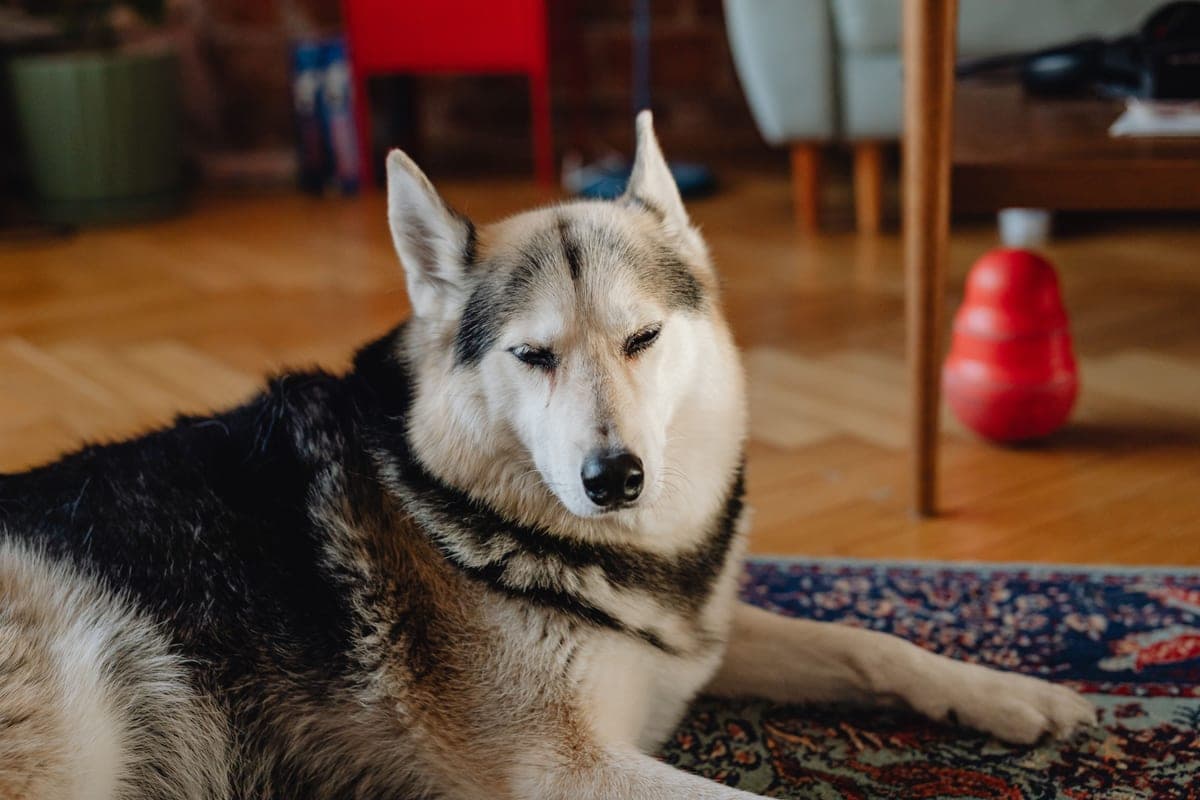
Dogs do not have the specific liver-enzyme deficiency that makes cats so vulnerable, so airborne fragrance is a smaller concern for them. The realistic risk with a dog is ingestion - eating cubes, or licking spilled wax. Pet Poison Helpline notes that fragranced liquid can irritate or burn skin and mouths, and the oils that concern cats are not harmless to dogs either. Store cubes closed and out of reach; site the warmer where a tail cannot reach it.
What is different about dogs
The cat problem is metabolic. Pet Poison Helpline explains that cats lack an essential liver enzyme needed to metabolize and eliminate certain essential oils, and VCA describes the same deficiency. That is a cat-specific vulnerability.
Dogs do not share it in the same way. They metabolize these compounds considerably better, which is why the guidance for dogs is less alarming than the guidance for cats and why the two should not be treated as one question.
That is a difference of degree rather than of kind. Better able to process something is not the same as unaffected, and a concentrated exposure - a dog that eats a cube or licks up a spill - is a different scenario from ambient fragrance in a ventilated room.
Ingestion is the realistic route
With a cat, the concerns are airborne exposure, walking through a spill and then grooming, and the metabolic vulnerability that makes small doses matter.
With a dog it is simpler and more behavioral: dogs eat things. Wax melt cubes are small, waxy, strongly scented and frequently shaped and colored like confectionery. A dog that finds an open pack on a low shelf will often eat several.
Two problems follow. The fragrance oils in a whole cube are a far more concentrated dose than anything the dog would breathe. And the wax itself, in quantity, is an indigestible mass - a large dog eating a couple of cubes is a different situation from a small dog eating six.
The Pet Poison Helpline entry on liquid potpourri documents the related hazard of fragranced liquid irritating or burning skin and mouths. Hot liquid wax adds a thermal burn risk to that.
If your dog eats wax melts, call your vet. Do not wait to see, and do not induce vomiting without being told to - VCA advises against inducing vomiting in this class of exposure. Pet Poison Helpline is on (855) 764-7661, 24 hours.
Airborne fragrance and dogs
Here we will be honest about what we do and do not know.
What is documented is the cat mechanism, in detail, by two authorities. What is not well documented, at least not in anything we could find and cite, is a specific quantitative account of what ambient warmed fragrance does to a dog over time.
What can be said reasonably: a dog's sense of smell is dramatically more acute than a human's. A concentration that reads as pleasant to you is not what the dog is experiencing. That is not a toxicity claim - it is a comfort one, and it is a good argument for a lighter hand and an open door.
Dogs with respiratory conditions, brachycephalic breeds with compromised airways, and elderly dogs deserve more caution. That is a matter for your vet, who knows the animal.
Signs to watch for
The clinical signs the authorities publish are documented for cats, and we are going to be clear about that rather than presenting them as dog guidance. VCA lists, for cats: scent on the coat, skin or breath; difficulty breathing; an uncoordinated gait; drooling; lethargy or weakness; muscle tremors; pawing at the mouth or face; redness or burns on the lips, gums, tongue or skin; and vomiting.
Several of those - drooling, pawing at the mouth, vomiting, visible irritation around the mouth - are the signs you would expect from an oral exposure in any animal, and they are what to look for if you think your dog has eaten a cube or licked a spill.
If you see them, or if you know the dog ate something and it seems fine, call your vet anyway. A vet with the animal in front of them is worth more than any page.
Practical measures
- Store packs closed, high and out of reach. This is the single highest-value action for a dog household. The cubes are the hazard, not the room.
- Site the warmer above tail height. A wagging tail clears a coffee table efficiently, and spilled wax is hot.
- Do not run a warmer in a crate room or a small closed space the dog cannot leave.
- Ventilate. Free, and it helps everyone in the room.
- Never apply anything fragranced to the dog.
- Prefer brands that publish ingredients. You cannot check a list that does not exist - and if you also have a cat, the cat guidance governs the household.
If there is a cat in the house as well, read wax melts and cats and follow that guidance instead. The stricter case governs.
Questions people actually ask
Are wax melts safe for dogs?
Dogs do not have the liver-enzyme deficiency that makes cats particularly vulnerable to essential oils, so ambient fragrance is a smaller concern for them. The realistic risk with a dog is ingestion - eating cubes or licking spilled wax. Store packs closed and out of reach, site the warmer above tail height, and ventilate the room.
What happens if my dog eats a wax melt?
Call your vet, and do not wait to see how it goes. A whole cube is a far more concentrated dose of fragrance oil than anything the dog would breathe, and the wax itself in quantity is an indigestible mass. Do not induce vomiting unless a vet tells you to. Pet Poison Helpline is available 24 hours on (855) 764-7661.
Can wax melts make a dog sick?
Ingestion can. Pet Poison Helpline documents that fragranced liquid can irritate or burn skin and mouths, and hot liquid wax adds a burn risk on top of that. Watch for drooling, pawing at the mouth or face, vomiting or visible irritation around the mouth, and call a vet if you see them.
Are wax melt fumes bad for dogs?
We could not find authoritative guidance specifically quantifying this for dogs, and we are not going to invent one. What is reasonable: a dog's sense of smell is far more acute than yours, so a concentration that reads as pleasant to you is much stronger to the animal. Use less, ventilate, do not run a warmer in a room the dog cannot leave, and consult your vet for a dog with respiratory problems.
Which is more at risk from wax melts, a cat or a dog?
A cat, clearly, and for a specific documented reason: cats lack liver enzymes needed to metabolize certain essential oils, which both Pet Poison Helpline and VCA describe. If you have both animals, follow the cat guidance for the whole household - the stricter case governs.
Sources
Every factual claim on this page traces to one of these, or is labeled as an assumption. We have not tested these products - our method is on the methodology page.
- Essential Oils and Cats — Pet Poison Helpline. Retrieved September 2, 2026.
- Essential Oil and Liquid Potpourri Poisoning in Cats — VCA Animal Hospitals. Retrieved September 2, 2026.
- Potpourri (liquid) — Pet Poison Helpline. Retrieved September 2, 2026.
Read next
Safety
Are wax melts safe for cats?
The named oils, the metabolic reason cats are affected, the signs of exposure, and what to do - all cited to Pet Poison Helpline and VCA.

Safety
Are wax melts safe?
The cluster head: fire risk, pets, children and air quality answered separately, with authorities named and the uncertainty stated.
Wax Melts
The best wax melts for pet odor, and the thing to check before you buy any of them
Odor-eliminating melts versus fragrance, plus the essential oils named by the Pet Poison Helpline and VCA that a pet household should check first.

Safety
Are wax melts safe around babies and children?
Burns, ingestion and fragranced air in a home with small children - with the third answered honestly rather than confidently.
Safety
Are wax melts safe around birds?
Not in a room a bird lives in. What VCA and Merck say about avian airways, the PTFE risk hiding in some warmers, and the honest alternative.
Safety
Pet-safe wax melts
There is no pet-safe certification. What the veterinary sources say, how cats, dogs and birds differ, and how to choose on disclosure instead of on a label.