Warmers
The best plug-in wax warmers, and the measurement to check before you buy
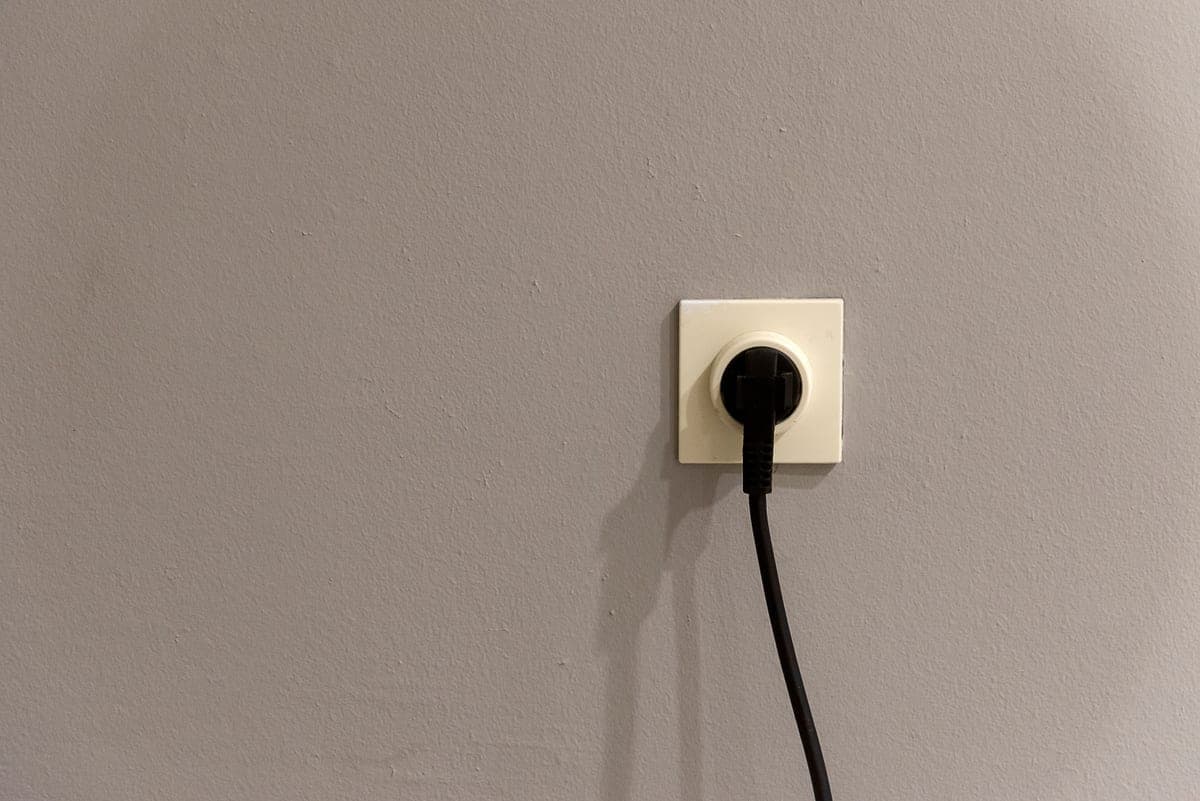
A plug-in takes no surface and has no cord. It also lives in your wall socket and gets warm, which makes where you put it part of the specification.
Disclosure — we earn a commission if you buy through the links on this page, at no extra cost to you. It does not change which products we pick or what we say about them. We accept no samples and no sponsorship. How this site is funded.
The short answer
The VP Home Wall Plug-in Wax Warmer is our pick, on the strength of publishing the two numbers that matter for this format: a 25 W, 120 V replaceable bulb and a body that stands 4.5 inches out from the wall. The second figure is the one almost nobody prints, and it is what decides whether the warmer works in the spot you had in mind.
Quick picks
| # | Product | Best for | Price |
|---|---|---|---|
| 01 | VP Home Plug-in A ceramic plug-in that publishes the one number that matters for this format, the bulb rating, and doubles as a night light. | Best plug-in for a hallway or bathroom | |
| 02 | 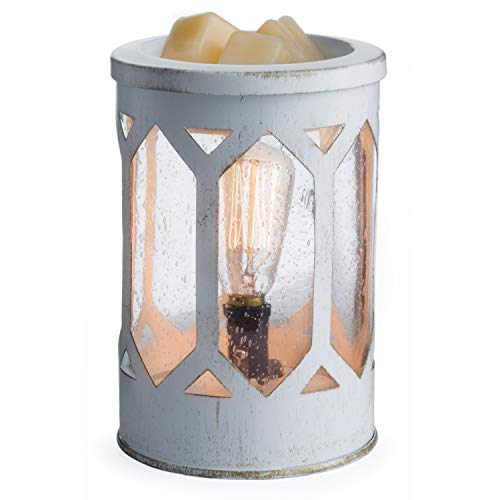 Candle Warmers Vintage Bulb A bulb warmer from a maker that publishes its wattage and names its bulb, which is more than most of this category manages. | Best bulb warmer with a named bulb | |
| 03 | Candle Warmers Metallic Dish A 10 W plate warmer from a maker that actually prints its wattage, which makes it the cheapest thing here to run and the easiest to check. | Lowest running cost |
#ad Prices come from the live data layer and are stamped with the date they were checked. Where no live price exists the button says "Check price" rather than showing an old number. How we are funded.
Why this list is short, and half of it is not plug-ins
Because we rank on published specification, and plug-in warmers are the worst documented corner of a badly documented category. There are hundreds of them. Almost none publish a wattage, and fewer still publish how far the body projects. One recent exception publishes something better than a wattage - a stated automatic shut-off - and we look at it in our Happy Wax warmers review.
Rather than pad the list with five interchangeable ceramic bodies whose sellers publish nothing, we have given you the one that does publish, and then two corded warmers as honest alternatives for the two reasons people usually want a plug-in in the first place. If the reason was "no surface space", the plug-in wins. If it was "cheap to run", it does not - and you should know that before you buy.
The measurement to check: projection
A plug-in warmer is a body hanging off a socket. How far it stands out from the wall decides where it can live, and it is the spec that gets discovered after purchase.
At 4.5 inches, the VP Home is not going behind a sofa pushed to the wall, is not going in a socket at skirting height in a hallway people walk through in the dark, and is not going behind a bedside table. It is fine at waist or chest height on an unobstructed wall, which is exactly where a bathroom, landing or entry socket usually is.
Check the socket you intend to use before you buy. If the answer is "behind something" or "in a walkway", buy a corded warmer instead and put it on a surface.
The dish is small, and that changes the maths
Plug-ins have the smallest dishes of any warmer type. In practice that means one cube, and it is one of the reasons Happy Wax publishes a separate dosing figure for outlet warmers - one to two of its shapes, against two to three in a standard warmer.
Less wax in the dish means a smaller throw and more frequent changes. That is not a defect, it is the trade for taking up no space. But it does mean a plug-in is the wrong tool for scenting an open-plan living room, and you will get through packs faster than the pack size suggests. See how many cubes to use and the room size guide.
One we do not recommend
Any plug-in used in an outlet that also carries a heavy load, and any plug-in in a socket you cannot see. This is a siting recommendation rather than a product one, and it matters more than which ceramic body you pick.
A plug-in warmer is a low-power device - 25 W is roughly what a phone charger draws at full tilt - so the device itself is not the concern. The concern is that it is a warm object in a socket, out of sight, running unattended for hours. Put it where you can see it, not behind furniture, and not sharing a socket with an extension lead running a heater.
The full question, with what the risk actually is and is not, is on are plug-in wax warmers a fire hazard.
What a plug-in costs to run
At 25 W and six hours a day, 17 cents per kilowatt-hour, a plug-in costs about $9.31 a year. Run it continuously - which plenty of people do, because it is out of the way and easy to forget - and it is about $37.23 a year.
Assumption, not a fact
Both figures assume 17 cents per kilowatt-hour. A round figure in the range US residential customers actually pay. Your own bill is the number that matters, and every formula on this site is written so you can substitute it.
That continuous figure is the honest argument for the 10 W plate warmer in third place: at the same duty cycle it is about $14.89 a year. Neither number is going to change your life, but if the appeal of a plug-in was that it is cheap, the wattage is where that claim gets tested. Working on the electricity page.
The picks in full
Best plug-in for a hallway or bathroom
VP Home Wall Plug-in Wax Warmer
A ceramic plug-in that publishes the one number that matters for this format, the bulb rating, and doubles as a night light.
The only true wall plug-in we index whose seller publishes both the bulb rating and how far the body projects from the wall. That second number is the one that decides whether it works in your hallway.
- 25 W, 120 V, replaceable bulb. The same class of consumable as a bulb-heated tabletop warmer, in a body with no cord.
- It stands 4.5 inches out from the wall. Measure before you commit an outlet behind a sofa or beside a doorway.
- Plug-ins have the smallest dishes of any warmer type. Expect one cube, and expect to top it up more often than the pack implies.
Skip this if
Your outlets are behind furniture or at floor level near a walkway. A plug-in projects out of the socket and it gets warm.
- Bulb
- 25 W, 120 V, replaceable VP Home listing (retailer listing, checked 2026-09-02)
- Timer
- Not published
- Capacity
- Not published
- Dimensions
- 6.4 in high, 4.5 in deep VP Home listing (retailer listing, checked 2026-09-02)
- Cord
- Not published
Published specifications
VP Home
VP Home Plug-in
#ad We show no price until we can verify a live one. How we are funded
Best bulb warmer with a named bulb
Candle Warmers Etc. Vintage Bulb Illumination Fragrance Warmer
A bulb warmer from a maker that publishes its wattage and names its bulb, which is more than most of this category manages.
Not a plug-in, and included deliberately: if the outlet you were going to use is somewhere a projecting warmer is a bad idea, this is the corded equivalent at the same 25 W.
- 25 W at 120 V. The bulb does two jobs, heating the dish from above and lighting the room, so you pay for light whether you want it or not.
- The NP3 designation matters. Warmer bulbs are not interchangeable by wattage alone, and the wrong base is the most common reason a working warmer looks broken.
- Bulb warmers heat more gently than plate warmers. Scent comes up slower and the wax lasts longer before it stops throwing.
Skip this if
You do not want a light source running all evening, or you would rather not own a warmer whose consumable is a proprietary bulb.
- Rated power
- 25 Candle Warmers Etc. listing, 120 V / 60 Hz / 25 W (retailer listing, checked 2026-09-02)
- Bulb
- NP3 warming bulb, included and replaceable Candle Warmers Etc. listing (retailer listing, checked 2026-09-02)NP3 is a specific Candle Warmers Etc. designation. Check the fitting before buying a generic replacement.
- Timer
- Not published
- Capacity
- Not published
- Dimensions
- 4.67 x 4.67 x 6.36 in Candle Warmers Etc. listing (retailer listing, checked 2026-09-02)
- Cord
- Not published
Published specifications
Candle Warmers Etc.
Candle Warmers Vintage Bulb
#ad We show no price until we can verify a live one. How we are funded
Lowest running cost
Candle Warmers Etc. Wax Melt Fragrance Warmer, Black Metallic Dipped Ceramic
A 10 W plate warmer from a maker that actually prints its wattage, which makes it the cheapest thing here to run and the easiest to check.
Also not a plug-in. It is here because if your reason for wanting one was cost, a 10 W corded plate warmer runs at well under half the electricity of any 25 W plug-in.
- 10 W at 120 V. Run it six hours a day for a year and you are buying roughly 22 kWh. The arithmetic is on our running-costs page with the rate assumption labeled.
- A plate warmer heats the dish directly rather than shining a bulb at it, so it reaches working temperature faster than a bulb warmer and holds it more evenly.
- The silicone dish top is the practical detail: cooled wax pops out in one piece instead of needing a heat-and-wipe.
Skip this if
You want the warmer to double as a lamp. There is no bulb in this one, so it throws scent and nothing else.
- Rated power
- 10 Candle Warmers Etc. listing, 120 V / 60 Hz / 10 W (retailer listing, checked 2026-09-02)10 W is the lowest rated draw in this registry, and it is the single number that decides running cost.
- Bulb
- None - warming plate Candle Warmers Etc. listing (retailer listing, checked 2026-09-02)No bulb to buy and none to fail. It also means no light, which some buyers want and some do not.
- Timer
- Not published
- Capacity
- Not published
- Dimensions
- 5 in tall, 3.5 in diameter Candle Warmers Etc. listing (retailer listing, checked 2026-09-02)
- Cord
- 3 ft, 2-prong US plug Candle Warmers Etc. listing (retailer listing, checked 2026-09-02)
Published specifications
Candle Warmers Etc.
Candle Warmers Metallic Dish
#ad We show no price until we can verify a live one. How we are funded
Questions people actually ask
Are plug-in wax warmers safe to leave plugged in?
They are low-power devices, typically around 25 W, and the electrical draw is not the issue. Siting is. Keep a plug-in where you can see it, not behind furniture, not in a socket at floor level in a walkway, and not sharing an outlet with a high-draw appliance. Turn it off when you leave the house for a long period, the same as any other unattended heat source.
What size bulb does a plug-in wax warmer take?
Commonly 15 W or 25 W, and the base type matters as much as the wattage. The VP Home warmer we index publishes 25 W at 120 V. Many sellers say only that the bulb is replaceable, in which case you have to identify the base from the warmer itself before ordering a replacement.
How many wax melts go in a plug-in warmer?
One, usually. Plug-ins have the smallest dishes of any warmer type. Happy Wax publishes separate dosing for this format - one to two of its shapes in an outlet warmer against two to three in a standard warmer - which is a useful confirmation that the smaller dish is a real difference and not just a smaller-looking one.
Do plug-in wax warmers use a lot of electricity?
No. At 25 W, six hours a day, at 17 cents per kilowatt-hour, a plug-in costs roughly $9 a year. Left running continuously it is roughly $37 a year. The rate and the hours are both assumptions - substitute your own using the formula on our electricity page.
Sources
Every factual claim on this page traces to one of these, or is labeled as an assumption. We have not tested these products - our method is on the methodology page.
- Wax Melt FAQ — Happy Wax. Retrieved September 2, 2026.
- Electric Power Monthly, average retail price of electricity to residential customers — U.S. Energy Information Administration. Retrieved September 2, 2026.
Read next

Warmers
The five types of wax warmer, and how to tell them apart
The taxonomy the rest of this hub hangs off: how each warmer type heats, what it takes as a consumable, and which one is not flame-free.
Safety
Are plug-in wax warmers a fire hazard?
What a plug-in actually draws, where the real risks are, and the siting rules that matter more than which model you buy.

Warmers
What size bulb does a wax warmer take?
How to identify a replacement warmer bulb: base type first, wattage second, and why matching watts alone gets people the wrong bulb.
Running Costs
How much electricity does a wax warmer use?
The formula, a table by rated wattage, and every assumption labeled - so you can rerun it against your own tariff and your own hours.
Scent Throw
How many wax melts do you put in a warmer?
Dose by warmer size and room size, anchored to the only published manufacturer dosing rule, plus why overfilling reduces throw.

Warmers
The best cheap wax warmers, and what you give up to get there
What vanishes from the spec sheet as price drops - wattage, timer, safety listing - and which of those you can live without.