Running Costs
How much electricity does a wax warmer use?
Nobody ranking for these products publishes a number. It needs a rated wattage and a calculator, not a lab, so here is the arithmetic in full.
The short answer
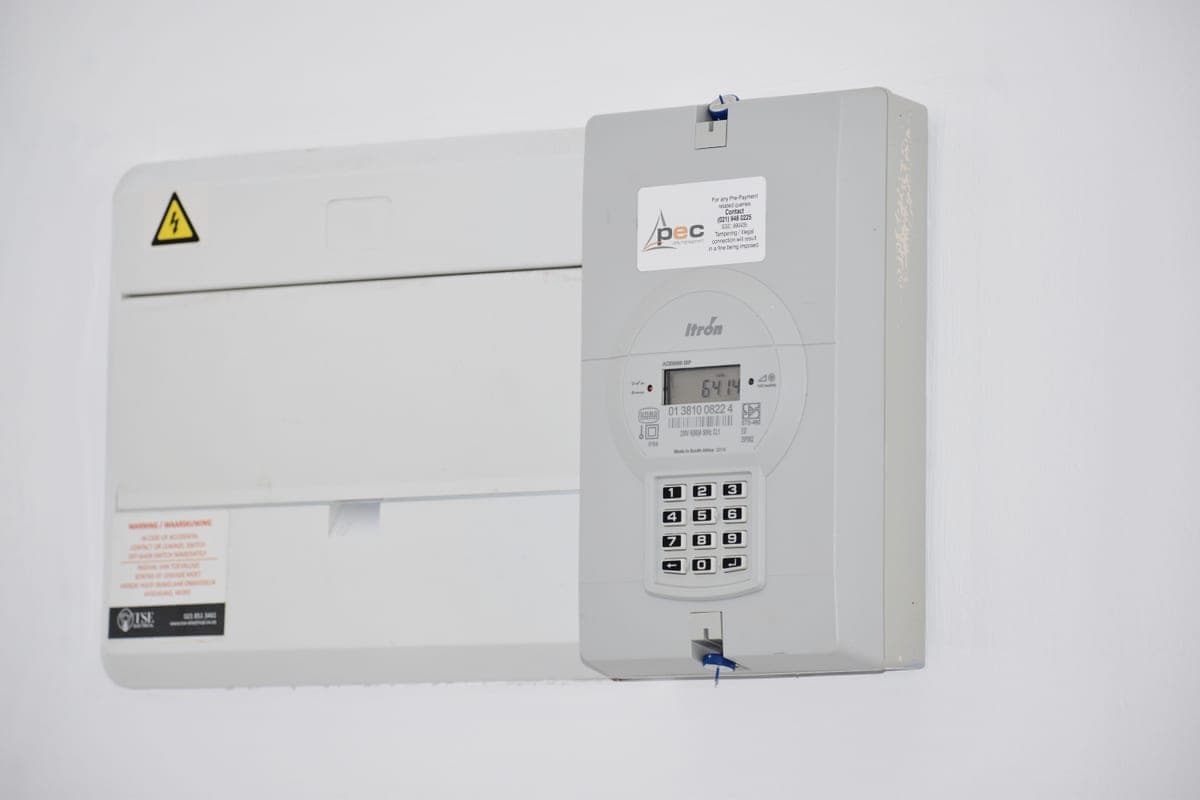
Between about $3.72 and $9.31 a year for the warmers we index, running six hours a day. The formula is watts ÷ 1000 × hours per day × 365 × your rate. At 17 cents per kilowatt-hour, a 10 W plate warmer costs about $3.72 a year and a 25 W plug-in about $9.31. Run that 25 W warmer continuously instead and it is about $37.23. Both the rate and the hours are assumptions - substitute your own.
The formula
There is nothing clever here, and that is the point. Every energy figure on this site comes from this one line:
Annual cost = (rated watts ÷ 1000) × hours per day × 365 × cost per kWh
Worked through slowly, for a 25 W warmer at six hours a day and 17 cents per kilowatt-hour:
- Watts to kilowatts. 25 ÷ 1000 = 0.025 kW.
- Kilowatts to kilowatt-hours per day. 0.025 × 6 = 0.15 kWh a day.
- Per year. 0.15 × 365 = 54.75 kWh.
- To dollars. 54.75 × $0.17 = $9.31.
That is the whole method. If you want the number for your house, put your own rate in step four and your own hours in step two.
The table
| Rated power | 2 h/day | 4 h/day | 6 h/day | 24 h/day |
|---|---|---|---|---|
| 10 W | $1.24 | $2.48 | $3.72 | $14.89 |
| 15 W | $1.86 | $3.72 | $5.59 | $22.34 |
| 20 W | $2.48 | $4.97 | $7.45 | $29.78 |
| 14 W | $1.74 | $3.47 | $5.21 | $20.85 |
| 25 W | $3.10 | $6.21 | $9.31 | $37.23 |
Assumption, not a fact
17 cents per kilowatt-hour is an assumption, not a fact about your house. A round figure in the range US residential customers actually pay. Your own bill is the number that matters, and every formula on this site is written so you can substitute it. US residential rates vary by more than a factor of three between states, so treat the shape of this table as the useful part and your own bill as the authority. This assumption is reviewed annually.
What the warmers we index actually draw
These are published figures, not estimates. Where a maker publishes nothing, we say so rather than borrowing a number from a lookalike product.
| Warmer | Rated power | Type | At 6 h/day |
|---|---|---|---|
| Candle Warmers Etc. Metallic Dish | 10 W | Plate, no bulb | $3.72 |
| Candle Warmers Etc. Hobnail Dish | 14 W | Plate, no bulb | $5.21 |
| Candle Warmers Etc. Vintage Bulb | 25 W | Bulb (NP3) | $9.31 |
| VP Home Plug-in | 25 W | Bulb, wall plug-in | $9.31 |
| EQUSUPRO Ceramic 3-in-1 | Not published | Plate, no bulb | Cannot be computed |
| Candle warmer lamps (all five we index) | Not published | Bulb | Cannot be computed |
The most useful thing in that table is the first two rows. Those two warmers come from the same maker, are the same size and shape, and differ by a factor of 2.4 on rated power. You cannot tell them apart by looking. That is why a published wattage is the first thing we rank on in our warmer picks.
Putting it in proportion
A useful sanity check, and one that cuts against selling you anything: none of these numbers is large.
At six hours a day, the entire annual electricity cost of the most power-hungry warmer we index is under ten dollars. The difference between the cheapest and the most expensive is about five dollars and sixty cents a year.
For comparison, at the same 17 cents per kilowatt-hour: a 1,500 W space heater costs about 25 cents an hour, so it passes the warmer's annual cost in about thirty-seven hours of use.
So the honest headline is: the electricity is not the expensive part. The wax is. If you want to spend less on this hobby, buy differently rather than running differently - see cost per hour of fragrance.
Where wattage does matter is at the extremes. A 25 W plug-in left running continuously, which happens because it is out of the way and easy to forget, is about $37 a year against $14.89 for a 10 W plate warmer at the same duty cycle. That is a real difference for a device doing an identical job.
Bulb warmers pay twice
A distinction the wattage table alone does not show.
In a bulb warmer the bulb is both the heat source and a light source. You are paying to illuminate the room whether or not you wanted light. In a plate warmer every watt goes into the dish.
That is why a 25 W bulb warmer does not necessarily throw 2.5 times as hard as a 10 W plate warmer despite drawing 2.5 times the power - some of that energy is leaving as visible light. Wattage is a rough proxy for throw, not a direct measure of it. See how wax warmers work.
There is also a consumable. A bulb warmer eventually needs a bulb, and that is a cost the electricity figure does not capture. Working through it on bulb replacement costs.
Checking it against your own bill
If you want to substitute a real rate rather than our assumption, your bill has the number on it - usually as a per-kWh charge, sometimes split into supply and delivery components that both need including.
Two things that catch people out. First, if you are on a time-of-use tariff the rate depends on when the warmer runs - evening use is often the expensive window, and evening is when a warmer runs. Second, a standing daily charge is not affected by the warmer at all, so exclude it.
Once you have your rate, the formula at the top of this page works unchanged. Multiply, and you have a number specific to your house rather than to our assumption - which is the whole point of publishing the method rather than just the answer.
Questions people actually ask
Do plug-in wax warmers use a lot of electricity?
No. A typical plug-in draws 15 W to 25 W, which is about a phone charger. At 17 cents per kilowatt-hour and six hours a day, a 25 W plug-in costs roughly $9.31 a year. Left running continuously it is roughly $37.23. Both figures assume that rate - substitute your own.
How do I work out what my wax warmer costs to run?
Rated watts divided by 1000, times hours per day, times 365, times your cost per kilowatt-hour. For a 25 W warmer at six hours a day and 17 cents per kWh: 0.025 x 6 x 365 x 0.17 = about $9.31 a year. The rated wattage is usually printed on a label on the base of the warmer.
Which wax warmer is cheapest to run?
The lowest published wattage we index is a 10 W plate warmer, at about $3.72 a year running six hours a day. Plate warmers with no bulb tend to be lowest, because every watt goes into the dish rather than partly into lighting the room. Most sellers in this category publish no wattage at all, so those products cannot be costed by anyone.
Does a candle warmer lamp use more electricity than a wax warmer?
Usually, though almost no lamp maker publishes a figure so it cannot be confirmed product by product. A lamp heats with a bulb, which also produces visible light, so some of the energy is doing a job other than melting wax. A plate warmer puts every watt into the dish. Where wattages are published, plate warmers run from 10 W and bulb warmers around 25 W.
Is it cheaper to run a wax warmer or burn a candle?
A candle uses no electricity but consumes itself, so the comparison is the electricity against the replacement cost of the wax. At under ten dollars a year the warmer's electricity is small next to what most people spend on candles. The full arithmetic, including the wax on both sides, is on our cost per hour of fragrance page.
Sources
Every factual claim on this page traces to one of these, or is labeled as an assumption. We have not tested these products - our method is on the methodology page.
- Electric Power Monthly, average retail price of electricity to residential customers — U.S. Energy Information Administration. Retrieved September 2, 2026.
- Milk Glass Candle Warmer Lamp product page — Candle Warmers Etc.. Retrieved September 2, 2026.
Read next
Running Costs
What an hour of fragrance actually costs
Wax plus electricity divided by published hours - the calculation that decides value, worked in full with its limits stated.

Running Costs
The cheapest way to keep a room smelling good
Five home fragrance formats costed per hour on the same basis, with what the shelf price hides in each case.

Running Costs
What warmer bulbs cost to own
The real consumable cost of a bulb warmer, and why sourcing rather than price is the thing to weigh before you buy one.
Warmers
The best wax melt warmers, ranked on what their makers actually publish
Wax melt warmers ranked on published wattage, bulb fitment and dish size, with the source for every number.
Warmers
The five types of wax warmer, and how to tell them apart
The taxonomy the rest of this hub hangs off: how each warmer type heats, what it takes as a consumable, and which one is not flame-free.

Warmers
Are candle warmers worth it?
The buy cost, the run cost and the four cases where the honest answer is no - plus what a warmer actually replaces.