Warmers
Are candle warmers worth it?
Yes for three specific reasons and no for four others, and the deciding factor is almost never the one people ask about.
Disclosure — we earn a commission if you buy through the links on this page, at no extra cost to you. It does not change which products we pick or what we say about them. We accept no samples and no sponsorship. How this site is funded.
The short answer
Worth it if you have ruled out open flames, you already own jar candles you like, or you want scent running while you fall asleep - a published auto shut-off solves a problem a candle cannot. Not worth it if the flame is the part you enjoy, you scent a room a few times a month, or you expect it to make a cheap candle smell expensive. Running cost is roughly $4 to $19 a year depending on the model, which is rarely the deciding factor either way.
Quick picks
| # | Product | Best for | Price |
|---|---|---|---|
| 01 |  Colonial Candle Timer Warmer A plate warmer with a published timer and a named third-party safety listing, which together answer the two things campus housing rules actually ask about. | Best for a strict housing rule | $14.38 View on Amazon
|
| 02 |  EQUSUPRO Ceramic 3-in-1 Ships with both a ceramic and a silicone dish, which solves wax changes properly, but it publishes no wattage so we cannot cost it. | Best for changing scents often | |
| 03 | 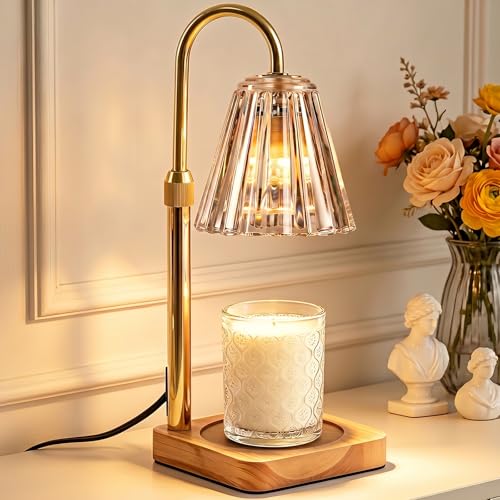 Marycele Warmer Lamp The clearest published spec sheet of any lamp here - timer, auto shut-off, dimmer, a standard GU10 base and now a bulb rating - and the highest running cost in this registry because of that last one. | Best timer for a bedroom | $22.77 View on Amazon
|
#ad Prices come from the live data layer and are stamped with the date they were checked. Where no live price exists the button says "Check price" rather than showing an old number. How we are funded.
What it actually costs
Two numbers, and the second one surprises people in both directions.
To buy: a working plate warmer sits at the bottom of this category's price range and a candle warmer lamp toward the top. We do not publish prices in prose because they move - every buy button on this site carries the live price and the date it was checked.
To run: this is computable, because a few makers publish a wattage.
| Warmer | Rated power | kWh per year | Cost per year |
|---|---|---|---|
| Candle Warmers Etc. metallic plate | 10 W | 21.9 | $3.72 |
| Candle Warmers Etc. hobnail plate | 24 W | 52.6 | $8.94 |
| Candle Warmers Etc. vintage bulb warmer | 25 W | 54.8 | $9.31 |
| Marycele candle warmer lamp | 50 W | 109.5 | $18.62 |
Assumption, not a fact
17 cents per kilowatt-hour is an assumption rather than a fact about your house. A round figure in the range US residential customers actually pay. Your own bill is the number that matters, and every formula on this site is written so you can substitute it. Six hours every day is also generous - halve the hours and halve the number.
The honest summary: the electricity is not the argument. Even the most expensive warmer here costs less per year than two jar candles. The purchase price and whether you use the thing are what decide the value.
The three cases where it is clearly worth it
1. You have ruled out open flames
A pet, a toddler, a rental agreement, a dorm rule or a near-miss. This is the reason most people arrive at the category, and a warmer answers it completely: no flame, no wick, nothing burning. The NFPA advises against candles in bedrooms and anywhere people may fall asleep; a warmer removes that scenario rather than managing it.
2. You already own jar candles you like
A lamp warms a jar candle from above without lighting it, and the maker's own FAQ is clear that warming will not cause the wax to burn off. You keep the wax you paid for. The honest caveat, from the same FAQ, is that repeated heating still evaporates the fragrance eventually - warming a candle vs burning it covers what you do and do not get.
3. You want scent running while you fall asleep
This is the use case a candle genuinely cannot serve, and it is the one worth paying for. A model with a published auto shut-off turns the anxious question in this whole category into a hardware feature - leaving a warmer on overnight explains why a stated shut-off matters more than the word timer.
The four cases where it is not
- The flame is the point. If what you like about candles is the light and the movement, no warmer supplies it. A lamp gives you a glow; it does not give you a flame, and people who wanted the flame do not stop wanting it.
- You scent a room occasionally. A warmer is hardware that has to earn its price through repeated use. If you light something twice a month, the arithmetic never gets there.
- You expect it to upgrade cheap wax. A warmer changes how fragrance is released, not how much of it is in the wax. A weak melt in a good warmer is a weak melt.
- You want to fix an odor. Fragrance covers; it does not remove a source. That argument in full is on wax melts for pet odor.
What you are actually comparing it against
"Worth it" only means something against an alternative, and people are usually weighing one of three.
| Instead of | What the warmer wins | What it loses |
|---|---|---|
| Jar candles | No flame, no soot, the wax is not consumed, and it can run unattended with a shut-off. | The flame itself, and the ritual that goes with lighting something. |
| Plug-in air fresheners | You choose the wax, change scent in a minute, and nothing is permanently in the socket. | Absolute convenience. A plug-in needs no decisions at all. |
| An oil diffuser | Longer sessions per dose, no water, no measuring and no daily cleaning. | Control over the exact ingredient, which oils give you and melts mostly do not. |
The full head-to-heads are on wax melts vs candles, wax melts vs plug-ins and wax melts vs diffusers.
If the answer is yes, buy on these four things
- A published wattage. Not because the cost is high, but because a maker that prints it tends to print other things too. Most of this market publishes nothing.
- A stated auto shut-off, not the word timer. Three different behaviors are sold under that word - what a warmer timer actually does.
- A named safety listing. UL or ETL. Candle Warmers Etc. states that all its products are UL or ETL approved, which is more than almost any other maker says.
- No proprietary consumable, or at least a bulb base you can buy anywhere. A warmer you cannot re-bulb is a warmer with an expiry date - replacement bulbs.
How long until it pays for itself
If you are replacing jar candles, there is a crossover point, and it arrives sooner than people expect for an unexpected reason.
A burned candle consumes its wax: when the jar is empty, the money is gone. A warmed candle does not - the maker's own FAQ states that warming a candle will not cause the wax to burn off. So a lamp buyer keeps buying the same candles but replaces them far less often.
The honest complication, from the same FAQ, is that repeated heating eventually evaporates the fragrance. You do not keep a candle forever; you keep the wax while the scent still runs out. So the saving is real and smaller than "candles last twice as long" implies.
For melts rather than candles the arithmetic is different and simpler: wax is inexpensive, the hardware is a one-off, and the electricity is a few dollars a year. The per-hour working is on cost per hour of fragrance.
Assumption, not a fact
We are not going to publish a payback period in months. It depends on which candles you buy, how often you run the warmer and what you paid for it - four variables we cannot know. The structure of the comparison is the useful part; the numbers are yours.
The question behind the question
People rarely arrive at "are candle warmers worth it" cold. There is usually a specific frustration underneath, and the honest answer depends on which one it is.
| The real question | Honest answer |
|---|---|
| Will this be safer than candles with a toddler or a pet in the house? | Yes, clearly, on fire risk. No flame, no wick, nothing burning. The remaining risks are placement ones. |
| Will my house finally smell like the shop? | No. Retail spaces run commercial systems. A warmer scents a room, not a building, and dose and placement do more than hardware. |
| Will this stop me worrying about leaving something on? | Only if you buy a model that publishes an automatic shut-off. The word timer alone does not buy that. |
| Is this cheaper than my candle habit? | Over time, usually - but the wax outlives the fragrance, so the saving is slower than the marketing suggests. |
| Will it fix the smell in my house? | No. Fragrance covers a source; it does not remove one. That is a cleaning problem wearing a shopping problem's clothes. |
What it is actually like to live with
The reviews never cover the daily friction, and it is usually what decides whether a warmer stays on the side table or ends up in a cupboard.
- Changing the wax is the recurring job. Every few days you clear a dish of spent wax and put fresh cubes in. On a silicone dish that is a five-second job. On a fixed ceramic well it is a warm-and-wipe, and it is the single most common reason people stop using a warmer they own - how to clean a wax warmer.
- You will forget to switch it off. Not dangerously, on a modern electric warmer - but a warmer running all day spends fragrance on an empty room. This is the argument for a published shut-off, or for a few-dollar outlet timer.
- It is a visible object. A plate warmer looks like an appliance; a lamp looks like furniture. That sounds trivial and it decides where you are willing to put it, which in turn decides how well it works.
- Scent stops registering before it stops working. Your nose adapts within minutes, so the room can smell fine to a visitor and of nothing to you. The fix is usually rotation rather than more wax - why you cannot smell your wax melts.
None of that is a reason not to buy one. All four are the things people find out in week three, and knowing them beforehand is most of what makes the purchase feel worth it afterwards.
What we do not recommend
Buying the expensive lamp first. If you are still asking whether warmers are worth it, the answer is to find out cheaply. A plate warmer answers the question for a fraction of the outlay.
Buying on energy-efficiency marketing. The spread across this entire category is about fifteen dollars a year. Anyone selling you a warmer on its running cost is selling you a rounding error.
A tealight burner as the cheap way in. It is the one format with an open flame, which undoes the main reason most buyers are here. We recommend one nowhere on this site.
The picks in full
Best for a strict housing rule
Colonial Candle Wax Melt Warmer with Timer, 3-in-1 Electric Wax Melter
A plate warmer with a published timer and a named third-party safety listing, which together answer the two things campus housing rules actually ask about.
If the answer is yes, this is the least regretted version of it: a timer, a named safety listing and no bulb to source later.
- The listing states it is "Safety tested and ETL-certified through a nationally recognized OSHA lab". ETL is Intertek's mark and sits alongside UL as a recognized testing lab, which matters when a housing contract asks for a listed appliance.
- No wattage is published anywhere on the listing, so we cannot compute its running cost the way we do for the warmers that print a number. Not published is what we record.
- 2 / 4 / 8 hours is written down; end-of-timer behavior is not. If auto shut-off is the feature you need in writing, check before you buy or add an outlet timer.
- A 36-inch cord is short for a dorm desk. Measure to the nearest outlet - an extension lead is itself a prohibited item on several of the campuses we read.
Skip this if
Your rule says bulb warmers only. This is a heating plate, which is the exact format those policies name as prohibited.
- Rated power
- Not published
- Bulb
- None - built-in metal heating plate Colonial Candle listing (retailer listing, checked 2026-09-02)No bulb means no proprietary replacement to source later, and it is the enclosed-element format that several housing policies specify.
- Timer
- 2 / 4 / 8 hour timer Colonial Candle listing (retailer listing, checked 2026-09-02)The listing publishes the three durations but does not state what happens when one ends. We record durations only, rather than assuming a shut-off.
- Capacity
- Fits jar candles up to 3.9 in diameter; removable ceramic dish Colonial Candle listing (retailer listing, checked 2026-09-02)
- Dimensions
- Not published
Published specifications
Colonial Candle
Colonial Candle Timer Warmer
Best for changing scents often
EQUSUPRO 3-in-1 Electric Ceramic Wax Melt Warmer
Ships with both a ceramic and a silicone dish, which solves wax changes properly, but it publishes no wattage so we cannot cost it.
The low-commitment way to find out whether you like the format at all, which is the right purchase if you are still asking the question in this headline.
- The second, silicone dish is the reason to consider it. Wax releases from cold silicone in one piece with no heating, no scraping and no paper towels.
- No published wattage. That is a real gap on a site that costs everything, and it is why this one is not our overall pick.
- The 3.6 inch dish is larger than the 3.5 inch Candle Warmers dishes. A small difference, and the gap between two cubes and three.
Skip this if
You want to know what it costs to run. EQUSUPRO does not publish a wattage for this warmer and we are not going to borrow one from a lookalike.
- Rated power
- Not published
- Bulb
- None - warming plate EQUSUPRO listing (retailer listing, checked 2026-09-02)
- Timer
- Not published
- Capacity
- 3.6 in ceramic dish, plus a 3.34 in silicone dish EQUSUPRO listing (retailer listing, checked 2026-09-02)Two dishes in the box is genuinely useful: ceramic for looks, silicone for the ten seconds it takes to change wax.
- Dimensions
- Not published
- Cord
- Not published
Published specifications
EQUSUPRO
EQUSUPRO Ceramic 3-in-1
#ad Price as of September 13, 2026. How we are funded
Best timer for a bedroom
Marycele Candle Warmer Lamp with Timer and Dimmer
The clearest published spec sheet of any lamp here - timer, auto shut-off, dimmer, a standard GU10 base and now a bulb rating - and the highest running cost in this registry because of that last one.
The version people actually want when they say candle warmer - it warms jar candles from above. It is also the most expensive here to run, at a published 50 W.
- 2 / 4 / 8 hours with auto shut-off answers the question this category is actually anxious about, which is what happens if you fall asleep.
- 50 W GU10 halogen, two bulbs in the box. GU10 is a standard base you can buy in any hardware shop, which is worth more over the life of the lamp than the spare bulb is.
- The adjustable head is the spec to check against your own jars. Set the head too high and the wax never reaches pool temperature; too low and you scorch the top layer.
- A 4-level dimmer is the only heat control on any warmer we index. Dimming a halogen bulb reduces its output, which is a real way to run a gentler session.
Skip this if
You are buying on running cost. Its 50 W bulb draws about five times what the cheapest plate warmer here does, and no lamp in this format avoids that.
- Rated power
- 50 Marycele listing, 50 W GU10 halogen bulb (retailer listing, checked 2026-09-07)Re-read on 2026-09-07: the listing now states the bulb rating, which it did not when we first recorded this product. 50 W is roughly double the highest-rated plate warmer in this registry.
- Bulb
- 50 W GU10 halogen, 2 included Marycele listing, Bulb Base GU10 (retailer listing, checked 2026-09-07)GU10 is a standard twist-lock base sold everywhere, which is a real advantage over the proprietary bulb designations used elsewhere in this category.
- Timer
- 2 / 4 / 8 hour timer with auto shut-off Marycele listing, 2/4/8H Auto-Off (retailer listing, checked 2026-09-07)A fixed-duration auto shut-off, not a repeating cycle. Set it and it turns itself off once.
- Capacity
- Head height adjustable; fits small jars, 3-wick candles and 22 oz jars Marycele listing (retailer listing, checked 2026-09-07)
- Dimensions
- 5.3 x 5.3 x 12 in, 2 lb Marycele listing (retailer listing, checked 2026-09-07)
- Cord
- Not published
Published specifications
Marycele
Marycele Warmer Lamp
Questions people actually ask
Do candle warmers actually make a room smell good?
They release fragrance from wax without burning it, and in a normally sized room that is enough to scent it within fifteen to thirty minutes. What they cannot do is overcome an open-plan space, a running extractor fan or a competing smell with a source. If a warmer seems weak, placement and dose are the first two things to change, and both are free.
How long does a candle warmer last?
Nobody publishes durability data for this category, so we will not pretend to know. What is knowable is which parts are consumable: a bulb-heated warmer needs a replacement bulb roughly every year to eighteen months at three hours a day, and a plate warmer has no consumable at all beyond the wax. That distinction predicts more about lifespan than brand does.
Are candle warmers worth the money?
They are if you have ruled out flames, already own jar candles you like, or want scent running while you sleep. They are not if the flame is what you enjoy, you scent a room only occasionally, or you expect a warmer to improve cheap wax. Running cost is about $4 to $19 a year depending on the model, so electricity is rarely the deciding factor.
How much does a candle warmer cost to run?
At six hours a day and 17 cents per kilowatt-hour, a 10 W plate warmer is about $3.72 a year, a 24 W plate about $8.94, a 25 W bulb warmer about $9.31 and a 50 W lamp about $18.62. Both the rate and the hours are assumptions to replace with your own, and most warmers publish no wattage at all.
Do candle warmers work as well as burning a candle?
They release fragrance without burning anything, and the maker's own FAQ confirms the wax is not consumed. Whether they throw scent as far is genuinely unsettled - nobody has published a comparison, and a flame moves air in a way a warmer does not. What is certain is that dose and placement matter more than either.
Is a candle warmer cheaper than buying candles?
Over time usually, because warming does not consume the wax, so a jar lasts far longer than it would burned. The saving is real but slower than it sounds: the fragrance still runs out eventually, and you have paid for hardware up front.
What is the downside of a candle warmer?
No flame, which is a downside if the flame is what you wanted. Beyond that: bulb-based models need a replacement bulb eventually, a lamp is the most expensive format to run, and a warmer left on all day spends fragrance on an empty room. None of those is a reason not to buy one, but all four catch people out.
Sources
Every factual claim on this page traces to one of these, or is labeled as an assumption. We have not tested these products - our method is on the methodology page.
- Frequently Asked Questions — Candle Warmers Etc.. Retrieved September 6, 2026.
- Safety with candles — National Fire Protection Association (NFPA). Retrieved September 2, 2026.
- Electric Power Monthly, average retail price of electricity to residential customers — U.S. Energy Information Administration. Retrieved September 2, 2026.
Read next
Warmers
The best wax melt warmers, ranked on what their makers actually publish
Wax melt warmers ranked on published wattage, bulb fitment and dish size, with the source for every number.
Compare
Wax melts vs candles
Nine axes compared in a table: flame risk, soot, cost per hour, throw, duration, cleanup - plus what a candle genuinely does better.
Warmers
The best cheap wax warmers, and what you give up to get there
What vanishes from the spec sheet as price drops - wattage, timer, safety listing - and which of those you can live without.
Warmers
The best wax warmers with a timer, ranked on what the timer actually does
Warmers with published timers, separated by what the timer does: one-shot auto shut-off, repeating daily cycle, or an unspecified claim.
Compare
Warming a candle vs burning it
The wax stops disappearing and the fragrance still runs out. What a warmer lamp changes about a jar candle, quoted from the maker's own FAQ.
Running Costs
How much electricity does a wax warmer use?
The formula, a table by rated wattage, and every assumption labeled - so you can rerun it against your own tariff and your own hours.