Safety
Are wax warmers allowed in dorms? What eight housing policies actually say
There is no national rule, and the schools that allow a warmer disagree about which kind. The deciding word in your contract is usually bulb, plate or open flame.

Disclosure — we earn a commission if you buy through the links on this page, at no extra cost to you. It does not change which products we pick or what we say about them. We accept no samples and no sponsorship. How this site is funded.
The short answer
Sometimes, and the word that decides it is usually bulb, plate or open flame. Of eight campus housing policies we read on 2 September 2026, five allow some form of electric wax warmer and three ban every wax device - and the five that allow one do not agree on which kind. Two permit bulb warmers only. One permits only a warmer with an enclosed heating element and an automatic shut-off. Read your own contract before you buy anything, because the same product is permitted on one campus and confiscated on another.
Quick picks
| # | Product | Best for | Price |
|---|---|---|---|
| 01 |  Colonial Candle Timer Warmer A plate warmer with a published timer and a named third-party safety listing, which together answer the two things campus housing rules actually ask about. | Best for a strict housing rule | $13.99 View on Amazon
|
| 02 | 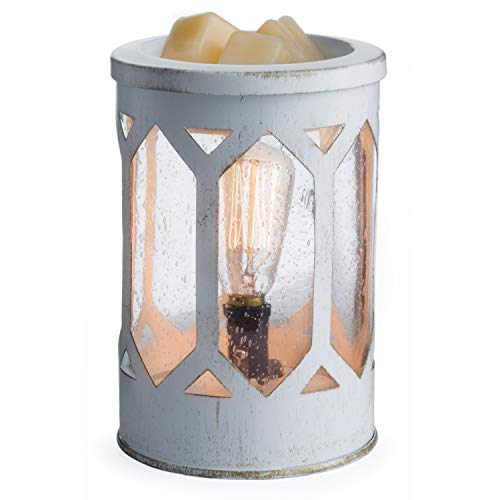 Candle Warmers Vintage Bulb A bulb warmer from a maker that publishes its wattage and names its bulb, which is more than most of this category manages. | Best bulb warmer with a named bulb | |
| 03 |  Marycele Warmer Lamp The clearest published spec sheet of any lamp here - timer, auto shut-off, dimmer, a standard GU10 base and now a bulb rating - and the highest running cost in this registry because of that last one. | Best timer for a bedroom | $19.99 View on Amazon
|
#ad Prices come from the live data layer and are stamped with the date they were checked. Where no live price exists the button says "Check price" rather than showing an old number. How we are funded.
What eight housing policies actually say
These are quoted word for word from each school's own housing or student conduct page, read on 2 September 2026. They are a sample of eight, not a survey of American higher education - but they are enough to show that the disagreement is real, and that it is about mechanism rather than about wax.
| School | What the policy says | Effect |
|---|---|---|
| Oklahoma State | "Wax warmers that use a light bulb are permitted" and "Candle warmers with a hot plate are prohibited" | Allowed - bulb only |
| McKendree University | "Light bulb candle/wax warmers are the only type of candle/wax warmers allowed on campus" | Allowed - bulb only |
| Nebraska-Lincoln | "Only candle warmers or potpourri burners with an enclosed heating element and an automatic shut off are allowed" | Allowed - two conditions |
| Northwest Missouri State | "Electric potpourri pots and wax warmers are allowed" | Allowed - no conditions stated |
| Iowa State | "Wickless candles/warmers are permitted" | Allowed - no conditions stated |
| Arkansas | Prohibited: "Candles (lit or unlit), incense and open flame/open coil activated potpourri and wax warmer products such as Scentsy" | Prohibited |
| Mary Washington | Prohibited: "candles (with or without wicks), candle/wax melt/warmers, and incense" | Prohibited |
| St. John Fisher | Prohibited: "Heat-activated or plug-in air fresheners, wax warmers, and salt lamps" | Prohibited |
Five allow something. Three allow nothing. And the five do not describe the same product: a heating-plate warmer is explicitly prohibited at Oklahoma State and explicitly permitted nowhere in that list, while a bulb warmer is the only permitted format at two schools and would struggle with Nebraska's enclosed-element wording on a strict reading.
The three rule shapes
Every policy we read is a version of one of three rules. Work out which one you are under before you look at a single product, because it eliminates most of the market for you.
1. Bulb warmers only
Oklahoma State permits "wax warmers that use a light bulb" and prohibits "candle warmers with a hot plate". McKendree says light bulb warmers are "the only type" allowed. The logic is that a bulb warmer is a lamp with a dish on it, while a plate warmer is a heating appliance, and heating appliances are the category residence halls fight with all year. If this is your rule you want a bulb-heated dish warmer or a candle warmer lamp, and the cheap ceramic plate warmers are out.
2. Enclosed element plus automatic shut-off
Nebraska-Lincoln allows only warmers "with an enclosed heating element and an automatic shut off". This is the most specific rule in the sample and the hardest to satisfy from a product listing, because the second half is a feature most sellers gesture at without describing. A warmer that says "timer" and never says what happens when the timer ends has not met this rule in writing. Our page on what a warmer timer actually does is entirely about that distinction.
3. No wax devices at all
Arkansas, Mary Washington and St. John Fisher ban the category. Mary Washington names "candle/wax melt/warmers" without qualification; St. John Fisher bans "heat-activated or plug-in air fresheners, wax warmers, and salt lamps", which sweeps up plug-ins and scented electronics generally. On those campuses there is no compliant warmer, and a product marketed as dorm-friendly is still contraband.
There is a fourth, quieter shape: the permissive one-liner. Northwest Missouri State says wax warmers are allowed and stops there; Iowa State permits "wickless candles/warmers". That reads like freedom, and mostly it is - but a residence director doing a health-and-safety inspection is still applying a general appliance rule, so the sensible reading is that the warmer is fine and common sense about where you put it still applies.
Why the wording decides it, not the product
These policies were written by fire-safety officers, not by people who shop for wax melts, and it shows in the vocabulary. Arkansas prohibits "open flame/open coil activated potpourri and wax warmer products such as Scentsy" - but Scentsy warmers are bulb-heated rather than open coil, so the brand named in the rule does not match the mechanism named in the same sentence. The brand is what that rule is really about.
Which has a practical consequence. You cannot reason from a mechanism to a verdict; you have to match your product to the words on the page. Three moves make that reliable:
- Search your housing contract for the words, not the concept. Candle, wax, warmer, potpourri, open flame, hot plate, heating element, air freshener, appliance, extension cord. One of those decides it.
- Ask housing by email, not at a front desk. A written reply naming the specific product is what survives an inspection. A verbal yes from whoever was on duty does not.
- Take the seller's own wording with you. If the rule asks for an enclosed element and an automatic shut-off, the useful evidence is the published description of both - which is exactly what we record, and flag as missing, for every product on this site.
The consumable side is rarely the issue. A pack of wax cubes is inert and unheated, and no policy in our sample regulates the wax on its own - Mary Washington's "wax melt" wording is the closest, and it is aimed at the device. What gets confiscated is hardware.
Rentals and leases are a different question
A lease is not a residence-hall handbook. Most residential leases say nothing at all about wax warmers, because they are written around an older list of worries: candles, open flames, space heaters, and anything that modifies the property. An electric warmer is an appliance in the same class as a table lamp, and it is unusual to see one named.
So for a renter the question is rarely whether it is allowed. It is one of these three:
- Does the lease have a no-candles or no-open-flame clause? If it does, that clause is an argument for an electric warmer rather than against one, because nothing is burning. The National Fire Protection Association advises against candles in bedrooms and anywhere people may fall asleep, which is the reasoning most of those clauses inherit.
- Is there a smoke or heat detector directly above it? A warmer does not smoke, but scorched wax in a dry dish can. Do not site one under a detector.
- Your deposit. Spilled wax on a carpet is the realistic cost of this hobby in a rental, and it is avoidable with a dish liner and a stable surface well back from the edge.
Assumption, not a fact
We are describing how these clauses are typically worded, not giving legal advice, and we have not read your lease. If your building has an addendum listing prohibited appliances - common in student housing blocks and some managed apartments - that addendum is the document that governs you, not the general tenancy agreement.
What to buy if your rule allows one
In rule order, because on this page the rule comes before the product.
- Match the heating format to the words in the policy. A bulb warmer where a bulb is specified, an enclosed plate where an enclosed element is specified. These are opposite products, and getting it backwards is the whole failure mode. The five warmer types sets out what each one is.
- Prefer a published auto shut-off to a published timer. One school in eight requires it outright, and every school cares about the same underlying scenario, which is a device left running in an empty room. See leaving a warmer on overnight.
- Look for a named third-party safety listing. UL or ETL. Housing contracts routinely require listed appliances, and it is one of the few claims in this category a seller can be held to.
- Measure the cord. Warmer cords run short - the one we picked publishes 36 inches - and an extension cord or multi-plug adapter is itself a prohibited item at several of these schools, St. John Fisher included.
- Check the wattage, then stop worrying about it. A warmer is a 10 to 25 W device. At 17 cents per kilowatt-hour that is a few dollars a year, and it is also the argument that it is not a cooking appliance. The arithmetic is on how much electricity a wax warmer uses.
One thing no product can give you is a certification that means dorm-safe. It does not exist. A listing using that phrase is describing a marketing category rather than a standard, and it carries no weight with the person doing the inspection.
What we do not recommend
A tealight burner, anywhere, ever. Every policy in this sample bans open flames before it says anything else, and a tealight burner is a candle with a dish on top of it. It is also the one warmer type we recommend nowhere on this site, for the same reason.
Buying first and reading the contract afterwards. The downside is not an argument you can win, it is confiscation and usually a fine, and in the policies we read the item does not come back.
Assuming last year's rule still holds. These documents are revised between academic years, and the wax warmer line is exactly the kind that gets tightened after one incident. Check the current handbook - not a forum post, and not this page.
The picks in full
Best for a strict housing rule
Colonial Candle Wax Melt Warmer with Timer, 3-in-1 Electric Wax Melter
A plate warmer with a published timer and a named third-party safety listing, which together answer the two things campus housing rules actually ask about.
First because it is the only warmer we index that publishes both an enclosed heating plate and a named third-party safety listing - the pair of things the stricter policies ask for in writing.
- The listing states it is "Safety tested and ETL-certified through a nationally recognized OSHA lab". ETL is Intertek's mark and sits alongside UL as a recognized testing lab, which matters when a housing contract asks for a listed appliance.
- No wattage is published anywhere on the listing, so we cannot compute its running cost the way we do for the warmers that print a number. Not published is what we record.
- 2 / 4 / 8 hours is written down; end-of-timer behavior is not. If auto shut-off is the feature you need in writing, check before you buy or add an outlet timer.
- A 36-inch cord is short for a dorm desk. Measure to the nearest outlet - an extension lead is itself a prohibited item on several of the campuses we read.
Skip this if
Your rule says bulb warmers only. This is a heating plate, which is the exact format those policies name as prohibited.
- Rated power
- Not published
- Bulb
- None - built-in metal heating plate Colonial Candle listing (retailer listing, checked 2026-09-02)No bulb means no proprietary replacement to source later, and it is the enclosed-element format that several housing policies specify.
- Timer
- 2 / 4 / 8 hour timer Colonial Candle listing (retailer listing, checked 2026-09-02)The listing publishes the three durations but does not state what happens when one ends. We record durations only, rather than assuming a shut-off.
- Capacity
- Fits jar candles up to 3.9 in diameter; removable ceramic dish Colonial Candle listing (retailer listing, checked 2026-09-02)
- Dimensions
- Not published
Published specifications
Colonial Candle
Colonial Candle Timer Warmer
Best bulb warmer with a named bulb
Candle Warmers Etc. Vintage Bulb Illumination Fragrance Warmer
A bulb warmer from a maker that publishes its wattage and names its bulb, which is more than most of this category manages.
Here for one specific rule shape: the schools that permit bulb warmers and prohibit heating plates. On those campuses this format is the permitted one and the pick above is the prohibited one.
- 25 W at 120 V. The bulb does two jobs, heating the dish from above and lighting the room, so you pay for light whether you want it or not.
- The NP3 designation matters. Warmer bulbs are not interchangeable by wattage alone, and the wrong base is the most common reason a working warmer looks broken.
- Bulb warmers heat more gently than plate warmers. Scent comes up slower and the wax lasts longer before it stops throwing.
Skip this if
You do not want a light source running all evening, or you would rather not own a warmer whose consumable is a proprietary bulb.
- Rated power
- 25 Candle Warmers Etc. listing, 120 V / 60 Hz / 25 W (retailer listing, checked 2026-09-02)
- Bulb
- NP3 warming bulb, included and replaceable Candle Warmers Etc. listing (retailer listing, checked 2026-09-02)NP3 is a specific Candle Warmers Etc. designation. Check the fitting before buying a generic replacement.
- Timer
- Not published
- Capacity
- Not published
- Dimensions
- 4.67 x 4.67 x 6.36 in Candle Warmers Etc. listing (retailer listing, checked 2026-09-02)
- Cord
- Not published
Published specifications
Candle Warmers Etc.
Candle Warmers Vintage Bulb
#ad We show no price until we can verify a live one. How we are funded
Best timer for a bedroom
Marycele Candle Warmer Lamp with Timer and Dimmer
The clearest published spec sheet of any lamp here - timer, auto shut-off, dimmer, a standard GU10 base and now a bulb rating - and the highest running cost in this registry because of that last one.
The auto shut-off pick. It is the only model here whose listing states the timer turns the warmer off, which is what a policy means when it asks for automatic shut off.
- 2 / 4 / 8 hours with auto shut-off answers the question this category is actually anxious about, which is what happens if you fall asleep.
- 50 W GU10 halogen, two bulbs in the box. GU10 is a standard base you can buy in any hardware shop, which is worth more over the life of the lamp than the spare bulb is.
- The adjustable head is the spec to check against your own jars. Set the head too high and the wax never reaches pool temperature; too low and you scorch the top layer.
- A 4-level dimmer is the only heat control on any warmer we index. Dimming a halogen bulb reduces its output, which is a real way to run a gentler session.
Skip this if
You are buying on running cost. Its 50 W bulb draws about five times what the cheapest plate warmer here does, and no lamp in this format avoids that.
- Rated power
- 50 Marycele listing, 50 W GU10 halogen bulb (retailer listing, checked 2026-09-07)Re-read on 2026-09-07: the listing now states the bulb rating, which it did not when we first recorded this product. 50 W is roughly double the highest-rated plate warmer in this registry.
- Bulb
- 50 W GU10 halogen, 2 included Marycele listing, Bulb Base GU10 (retailer listing, checked 2026-09-07)GU10 is a standard twist-lock base sold everywhere, which is a real advantage over the proprietary bulb designations used elsewhere in this category.
- Timer
- 2 / 4 / 8 hour timer with auto shut-off Marycele listing, 2/4/8H Auto-Off (retailer listing, checked 2026-09-07)A fixed-duration auto shut-off, not a repeating cycle. Set it and it turns itself off once.
- Capacity
- Head height adjustable; fits small jars, 3-wick candles and 22 oz jars Marycele listing (retailer listing, checked 2026-09-07)
- Dimensions
- 5.3 x 5.3 x 12 in, 2 lb Marycele listing (retailer listing, checked 2026-09-07)
- Cord
- Not published
Published specifications
Marycele
Marycele Warmer Lamp
Questions people actually ask
Are wax melts allowed in dorms?
The wax itself is almost never the issue - it is inert until something heats it, and no policy in our sample of eight regulates the cubes on their own. What gets regulated is the warmer. If your school permits an electric warmer the melts come with it; if it bans wax warmers outright, a pack of cubes and no device is permitted and useless.
Are candle warmers allowed in dorms?
It depends on the type, and schools split on exactly this. Oklahoma State permits wax warmers that use a light bulb and prohibits candle warmers with a hot plate. McKendree allows light bulb warmers as the only permitted type. Nebraska-Lincoln allows only warmers with an enclosed heating element and an automatic shut off. Arkansas, Mary Washington and St. John Fisher prohibit the category entirely.
Are Scentsy warmers allowed in dorms?
At the University of Arkansas, no - the prohibited items list names Scentsy specifically. Elsewhere it turns on the mechanism your policy describes rather than on the brand. Worth knowing: Scentsy warmers are bulb-heated, so on a campus that permits bulb warmers and bans heating plates the format is the permitted one even though another school singles the brand out by name.
What is the difference between a bulb warmer and a hot plate warmer?
A bulb warmer heats the dish from above with a light bulb, so it is a lamp doing two jobs and it costs you a replacement bulb eventually. A plate warmer has an electric heating element under the dish, no bulb, and usually a lower rated wattage. Schools distinguish between them because a heating plate reads as a cooking appliance and a bulb reads as a lamp.
Can I use a wax warmer in an apartment or rental?
Usually yes. Leases rarely name wax warmers; they name candles, open flames and space heaters, and an electric warmer is none of those. Check for a prohibited-appliance addendum, do not site the warmer under a smoke detector, and protect the carpet - spilled wax is the realistic cost of this in a rental, not fire risk.
What happens if I bring a banned wax warmer to campus?
In the policies we read the standard outcome is confiscation, usually with a fine attached, and the item is not returned. That is a poor trade for a twenty dollar appliance. If your rule bans warmers, the alternatives that need no heat at all - a reed diffuser, for instance - are the sensible substitute.
Sources
Every factual claim on this page traces to one of these, or is labeled as an assumption. We have not tested these products - our method is on the methodology page.
- Approved and Prohibited Personal Items — Oklahoma State University Residential Life. Retrieved September 2, 2026.
- Residential Safety and Prohibited Items List — McKendree University Residence Life. Retrieved September 2, 2026.
- Housing and Dining Policy Library - Candles — University of Nebraska-Lincoln Housing. Retrieved September 2, 2026.
- Housing Handbook - Prohibited Items — Northwest Missouri State University. Retrieved September 2, 2026.
- Prohibited Items - Department of Residence — Iowa State University. Retrieved September 2, 2026.
- Housing Handbook 1.2 - What Not to Bring, Prohibited Items — University of Arkansas Housing. Retrieved September 2, 2026.
- Prohibited in Residence Halls — University of Mary Washington Residence Life and Housing. Retrieved September 2, 2026.
- Student Conduct - Fire Hazards — St. John Fisher University. Retrieved September 2, 2026.
- Safety with candles — National Fire Protection Association (NFPA). Retrieved September 2, 2026.
Read next
Warmers
The five types of wax warmer, and how to tell them apart
The taxonomy the rest of this hub hangs off: how each warmer type heats, what it takes as a consumable, and which one is not flame-free.
Warmers
The best wax warmers with a timer, ranked on what the timer actually does
Warmers with published timers, separated by what the timer does: one-shot auto shut-off, repeating daily cycle, or an unspecified claim.
Safety
Can you leave a wax warmer on overnight?
A direct answer, the NFPA position on the flame version of the question, and the reason overnight running gives you nothing anyway.
Safety
Are plug-in wax warmers a fire hazard?
What a plug-in actually draws, where the real risks are, and the siting rules that matter more than which model you buy.
Running Costs
How much electricity does a wax warmer use?
The formula, a table by rated wattage, and every assumption labeled - so you can rerun it against your own tariff and your own hours.
Compare
Wax melts vs candles
Nine axes compared in a table: flame risk, soot, cost per hour, throw, duration, cleanup - plus what a candle genuinely does better.