Warmers
The best wax warmers for a large room
Only one specification predicts how much scent a warmer can push into a big space, and most of this category refuses to print it.
Disclosure — we earn a commission if you buy through the links on this page, at no extra cost to you. It does not change which products we pick or what we say about them. We accept no samples and no sponsorship. How this site is funded.
The short answer
Buy on published wattage - it is the only specification that predicts how hard a warmer can work, and most sellers do not print it. Among the ones that do, 24 W to 25 W is the practical sweet spot for a large room and 50 W is the ceiling. But before you upgrade: in an open-plan space, two modest warmers in two places beat one powerful warmer in one place, and that is usually the cheaper fix as well.
Quick picks
| # | Product | Best for | Price |
|---|---|---|---|
| 01 |  Candle Warmers Hobnail Dish The same plate-and-silicone-dish design as the metallic model at more than double the rated wattage: warmer dish, faster throw, higher bill. | Best plate warmer for a larger room | $15.99 View on Amazon
|
| 02 | 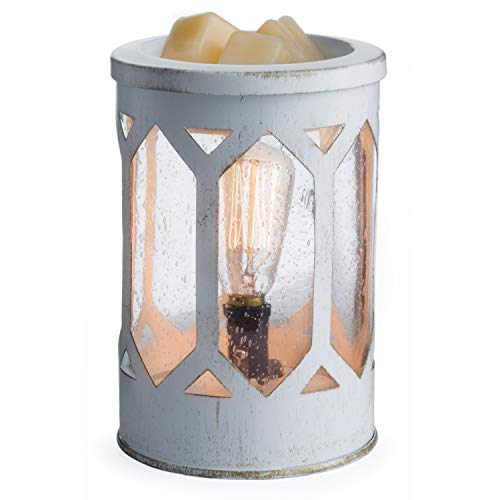 Candle Warmers Vintage Bulb A bulb warmer from a maker that publishes its wattage and names its bulb, which is more than most of this category manages. | Best bulb warmer with a named bulb | |
| 03 | 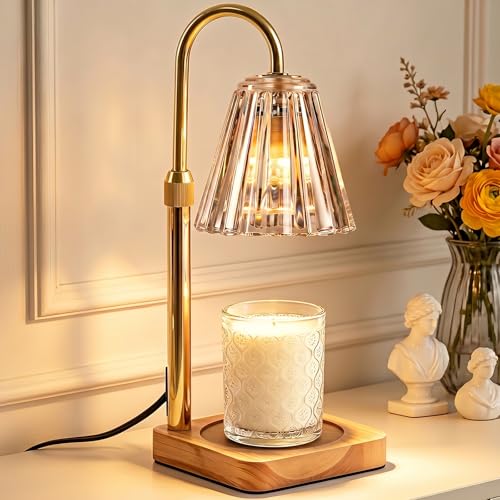 Marycele Warmer Lamp The clearest published spec sheet of any lamp here - timer, auto shut-off, dimmer, a standard GU10 base and now a bulb rating - and the highest running cost in this registry because of that last one. | Best timer for a bedroom | $22.77 View on Amazon
|
#ad Prices come from the live data layer and are stamped with the date they were checked. Where no live price exists the button says "Check price" rather than showing an old number. How we are funded.
Why wattage is the only useful number here
A warmer's job is to hold wax at a temperature where fragrance leaves it. How much fragrance reaches the far end of a big room is governed by how much wax is at working temperature and how the air moves - and of the things a buyer can check before ordering, only the power rating speaks to the first.
Dish size matters too, but in a narrower way: a bigger dish holds more wax, which extends a session rather than making it stronger. A 3.5 inch dish running two cubes is not out-thrown by a larger dish running two cubes.
Everything else in a product listing - ceramic versus glass, the finish, the shape - is about how it looks. That is a legitimate reason to prefer one, and it is not a performance claim.
| Warmer | Rated power | Format | Cost per year |
|---|---|---|---|
| Candle Warmers Etc. metallic plate | 10 W | Plate, silicone dish | $3.72 |
| Candle Warmers Etc. hobnail plate | 24 W | Plate, silicone dish | $8.94 |
| Candle Warmers Etc. vintage bulb | 25 W | Bulb over a removable dish | $9.31 |
| Marycele lamp | 50 W | Lamp over a jar candle | $18.62 |
| Everything else we index | Not published | - | Cannot be computed |
The 10 W and the 24 W are the same warmer
This is the cleanest demonstration on the site that power is what you are buying.
Candle Warmers Etc. sells two plate warmers that are, on paper, identical: same 5 inch height, same 3.5 inch silicone dish, same 3 ft cord and dial switch, no bulb in either. One is rated 10 W and the other 24 W. Nothing in the marketing raises it; you find it by reading the power line.
In a bedroom the 10 W is the better buy and costs a third as much to run. In a living room the 24 W reaches working temperature faster and holds a hotter pool, which is what a larger volume of air needs. Same object, different room.
Two warmers beat one, and cost less
This is the recommendation people do not expect from a page about buying a bigger warmer.
Scent does not travel around corners or through doorways well. An open-plan space is usually several connected volumes rather than one room, and a single warmer - however powerful - is being asked to do something that placement, not wattage, controls. Two 10 W warmers in two positions cover that geometry far better than one 24 W warmer in the middle of it, and at 20 W total they still cost under eight dollars a year to run.
The placement logic, including the height and airflow variables that do most of the work, is on where to put a warmer. How to size the dose to the actual volume of the room is on the room size guide.
The wax matters as much as the warmer
A more powerful warmer cannot put fragrance into the air that is not in the wax. If a large room is under-scented, the wax is at least as likely to be the constraint as the hardware.
Two things to check before upgrading the warmer:
- Ounces per cube. Packs in this category range from about 0.38 oz to 0.92 oz a cube behind identical-looking six-cube fronts. A bigger cube is more fragrance in the dish - wax melts for large rooms has the table.
- Whether the wax is spent. Warmed wax looks the same long after its fragrance has gone, which is the most common reason a big room stops smelling of anything - why you cannot smell your wax melts.
A high ceiling is a different problem from a wide floor
"Large room" covers two situations that behave differently, and the fix is not the same for both.
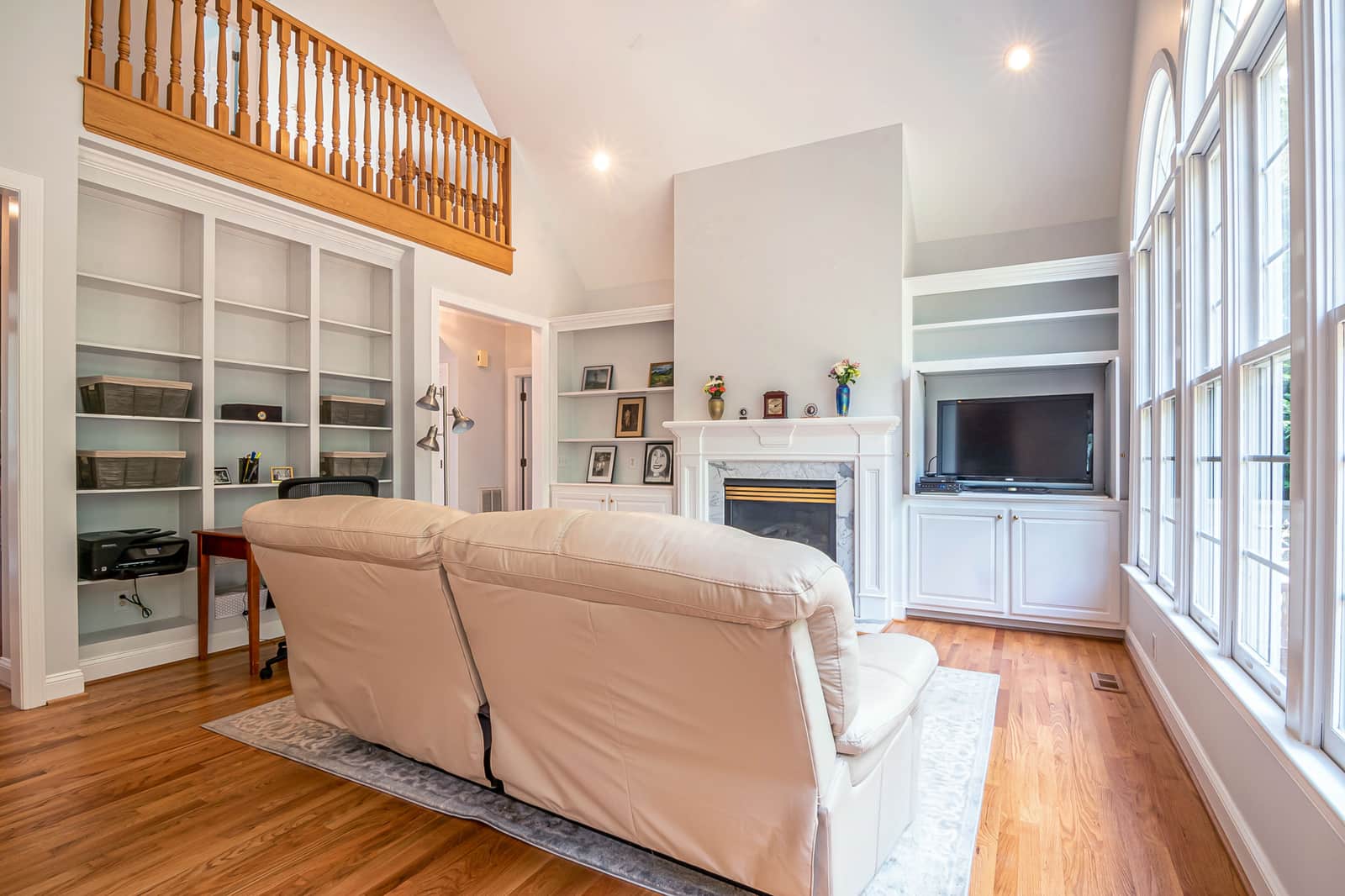
Fragrance disperses into volume, not floor area. A room with a vaulted or double-height ceiling can have a modest footprint and still dilute scent far more than its square footage suggests, because warm scented air rises into a space nobody occupies. That is a dose-and-height problem: more wax helps less than moving the warmer up and closer to where people actually sit.
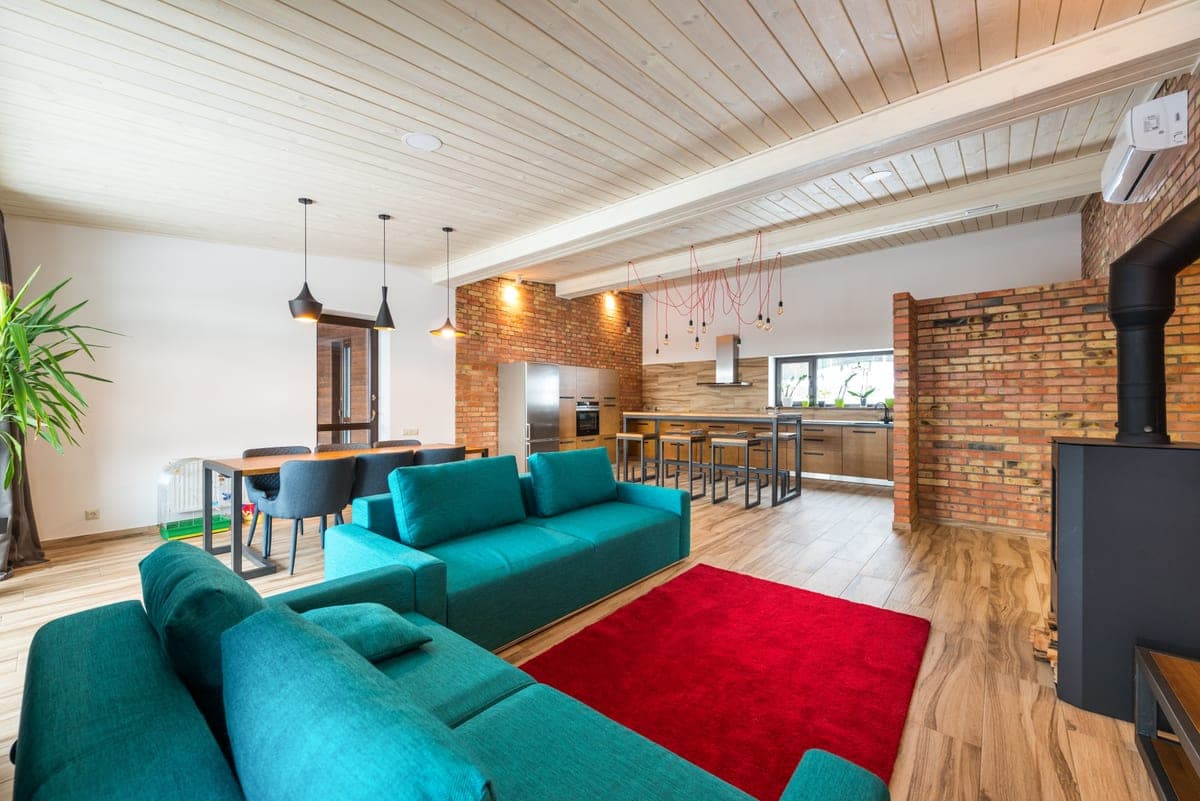
A wide, open floor plan is a geometry problem instead. The air is not being lost upward, it simply is not moving between the zones. More power does not solve that; a second warmer in the second zone does.
The arithmetic for converting room dimensions into a sensible dose - and the point at which adding wax stops helping - is on the room size guide.
Assumption, not a fact
Nobody in this category publishes coverage figures, and any listing claiming to scent a specific square footage is asserting something untested. The guidance here reasons from how warm air behaves rather than from measurements we have taken.
The open-plan strategy
If you are scenting a kitchen-diner-living space, this is what we would actually do, in order.
- Put the first warmer on the route between zones, not in the middle of the biggest one. Doorways and walkways borrow the air movement people create.
- Get it to seat height or above. A warmer on a low shelf scents the layer of air below knee height first.
- Add a second warmer before adding power. Two 10 W warmers in two zones outperform one 24 W warmer in one zone, and cost about eight dollars a year between them.
- Then increase the dose, one cube at a time, giving each change half an hour before judging it.
- Then, and only then, buy bigger wax. Ounces per cube vary by more than a factor of two between brands, and that is a cheaper upgrade than hardware.
The reason that order works is that the first three steps cost almost nothing and fix the majority of under-scented large rooms. Buying a more powerful warmer first is the expensive way to discover the problem was placement.
Does a lamp work better in a big room?
It is the obvious upgrade to reach for, since the one lamp we index publishes double the power of any plate warmer. The honest answer is more complicated than the wattage suggests.
What a lamp genuinely changes is what it can heat. It warms a whole jar candle from above rather than two cubes in a dish, which is a much larger reservoir of fragranced wax at working temperature. For a big room that is a real advantage, and it is the strongest argument for the format.
What nobody has established is whether a lamp actually throws further than a plate warmer at the same dose. No comparison has been published, the mechanisms differ - a beam onto a surface versus a heated plate under a dish - and we are not going to invent a result. Anyone telling you a lamp is definitively stronger is guessing.
What it costs is settled: the lamp we index publishes 50 W, which works out around $18.62 a year at six hours a day against $8.94 for a 24 W plate. If you want the format, buy it for the jar candles and the way it looks - wax warmer vs candle warmer lamp sets out the trade properly.
What we do not recommend
Buying a warmer sold as high-output with no published wattage. Output is not a specification. If the number is not on the listing, the claim is decoration.
Overfilling the dish to compensate. A deeper pool takes longer to reach temperature and gives less usable scent, not more - how many cubes per warmer explains why.
A 50 W lamp bought purely for power. It is the highest running cost in this registry and its format suits jar candles rather than cubes. Buy it because you want a lamp, not because you want watts.
The picks in full
Best plate warmer for a larger room
Candle Warmers Etc. Wax Melt Fragrance Warmer, Gray Hobnail Dot Ceramic
The same plate-and-silicone-dish design as the metallic model at more than double the rated wattage: warmer dish, faster throw, higher bill.
First because it publishes 24 W and is otherwise identical to its 10 W sibling - the clearest example on this site of power being the variable that matters.
- 24 W at 120 V, printed on the listing. That is close to a bulb warmer's draw without the bulb.
- The extra power buys a hotter dish, which gets a cube throwing sooner and pushes scent further. Useful in a living room, wasted on a bedside table.
- The 3.5 inch dish is small. Two standard cubes fill it and three is a squeeze.
Skip this if
You are buying on running cost. Its 10 W sibling is the same product on paper apart from the power rating.
- Rated power
- 24 Candle Warmers Etc. listing, 120 V / 60 Hz / 24 W (retailer listing, checked 2026-09-02)Same body and dish as the 10 W metallic model but rated at 24 W. Two warmers that look identical can differ by more than double on power.
- Bulb
- None - warming plate Candle Warmers Etc. listing (retailer listing, checked 2026-09-02)
- Timer
- Not published
- Capacity
- Not published
- Dimensions
- 5 in tall, 3.5 in diameter Candle Warmers Etc. listing (retailer listing, checked 2026-09-02)
- Cord
- 3 ft, 2-prong US plug Candle Warmers Etc. listing (retailer listing, checked 2026-09-02)
Published specifications
Candle Warmers Etc.
Candle Warmers Hobnail Dish
Best bulb warmer with a named bulb
Candle Warmers Etc. Vintage Bulb Illumination Fragrance Warmer
A bulb warmer from a maker that publishes its wattage and names its bulb, which is more than most of this category manages.
25 W from the same maker, with a bulb doing the heating. Slower to reach temperature than a plate and gentler on the wax.
- 25 W at 120 V. The bulb does two jobs, heating the dish from above and lighting the room, so you pay for light whether you want it or not.
- The NP3 designation matters. Warmer bulbs are not interchangeable by wattage alone, and the wrong base is the most common reason a working warmer looks broken.
- Bulb warmers heat more gently than plate warmers. Scent comes up slower and the wax lasts longer before it stops throwing.
Skip this if
You do not want a light source running all evening, or you would rather not own a warmer whose consumable is a proprietary bulb.
- Rated power
- 25 Candle Warmers Etc. listing, 120 V / 60 Hz / 25 W (retailer listing, checked 2026-09-02)
- Bulb
- NP3 warming bulb, included and replaceable Candle Warmers Etc. listing (retailer listing, checked 2026-09-02)NP3 is a specific Candle Warmers Etc. designation. Check the fitting before buying a generic replacement.
- Timer
- Not published
- Capacity
- Not published
- Dimensions
- 4.67 x 4.67 x 6.36 in Candle Warmers Etc. listing (retailer listing, checked 2026-09-02)
- Cord
- Not published
Published specifications
Candle Warmers Etc.
Candle Warmers Vintage Bulb
#ad Price as of September 13, 2026. How we are funded
Best timer for a bedroom
Marycele Candle Warmer Lamp with Timer and Dimmer
The clearest published spec sheet of any lamp here - timer, auto shut-off, dimmer, a standard GU10 base and now a bulb rating - and the highest running cost in this registry because of that last one.
The most power published by anything we index at 50 W, and the format that takes a whole jar candle rather than cubes.
- 2 / 4 / 8 hours with auto shut-off answers the question this category is actually anxious about, which is what happens if you fall asleep.
- 50 W GU10 halogen, two bulbs in the box. GU10 is a standard base you can buy in any hardware shop, which is worth more over the life of the lamp than the spare bulb is.
- The adjustable head is the spec to check against your own jars. Set the head too high and the wax never reaches pool temperature; too low and you scorch the top layer.
- A 4-level dimmer is the only heat control on any warmer we index. Dimming a halogen bulb reduces its output, which is a real way to run a gentler session.
Skip this if
You are buying on running cost. Its 50 W bulb draws about five times what the cheapest plate warmer here does, and no lamp in this format avoids that.
- Rated power
- 50 Marycele listing, 50 W GU10 halogen bulb (retailer listing, checked 2026-09-07)Re-read on 2026-09-07: the listing now states the bulb rating, which it did not when we first recorded this product. 50 W is roughly double the highest-rated plate warmer in this registry.
- Bulb
- 50 W GU10 halogen, 2 included Marycele listing, Bulb Base GU10 (retailer listing, checked 2026-09-07)GU10 is a standard twist-lock base sold everywhere, which is a real advantage over the proprietary bulb designations used elsewhere in this category.
- Timer
- 2 / 4 / 8 hour timer with auto shut-off Marycele listing, 2/4/8H Auto-Off (retailer listing, checked 2026-09-07)A fixed-duration auto shut-off, not a repeating cycle. Set it and it turns itself off once.
- Capacity
- Head height adjustable; fits small jars, 3-wick candles and 22 oz jars Marycele listing (retailer listing, checked 2026-09-07)
- Dimensions
- 5.3 x 5.3 x 12 in, 2 lb Marycele listing (retailer listing, checked 2026-09-07)
- Cord
- Not published
Published specifications
Marycele
Marycele Warmer Lamp
Questions people actually ask
Why does my wax warmer not scent my whole house?
Because scent disperses into volume and does not travel around corners or through doorways well. A single warmer scents the space it is in and, if it is near a doorway, some of the space next to it. Scenting a whole house means several warmers in several places, which at 10 to 25 W each still costs only a few dollars a year in total.
Does a higher wattage warmer use a lot more electricity?
More, but not a lot in absolute terms. At six hours a day and 17 cents per kilowatt-hour, a 10 W plate is about $3.72 a year and a 50 W lamp about $18.62. That is a fivefold difference on a small base, which is why running cost is a reason to choose between formats rather than a reason to avoid the category.
What wattage wax warmer do I need for a large room?
Among the warmers that publish a rating, 24 W to 25 W is the practical sweet spot for a large room and 50 W is the ceiling - though the 50 W models are lamps built for jar candles rather than cubes. Most of the category publishes no wattage at all, which makes it unbuyable on this criterion.
Will a bigger wax warmer make my house smell stronger?
Up to a point. More power holds a hotter pool, which releases fragrance faster. What it cannot do is add fragrance that is not in the wax, or carry scent around corners. If a large space is under-scented, check the wax weight and whether it is spent before upgrading the hardware.
Is one big warmer better than two small ones?
In an open-plan space, usually the opposite. Scent does not travel well around corners or through doorways, so two modest warmers in two positions cover the geometry better than one powerful warmer in the middle. Two 10 W warmers total 20 W, which is still only a few dollars a year to run.
How many wax melts should I use in a large room?
More than in a bedroom, but the increase is smaller than people expect and there is a ceiling - past a certain depth a bigger pool takes longer to reach temperature and gives back less. Start with two cubes, give it half an hour, and add a third only if the room is genuinely under-scented.
Does a candle warmer lamp work better in a big room?
It publishes more power - the one we index states 50 W against 24 W for a plate warmer - and it warms a whole jar candle rather than a couple of cubes. Whether that translates to more scent at the far end of a room is not something anyone has measured, and placement remains the bigger variable.
Sources
Every factual claim on this page traces to one of these, or is labeled as an assumption. We have not tested these products - our method is on the methodology page.
- Electric Power Monthly, average retail price of electricity to residential customers — U.S. Energy Information Administration. Retrieved September 2, 2026.
- Frequently Asked Questions — Candle Warmers Etc.. Retrieved September 6, 2026.
Read next
Wax Melts
The best wax melts for large rooms, and the honest limits of the format
What actually scales in a big room: dose, warmer temperature, siting and the number of warmers. Brand is the smallest variable.
Scent Throw
Matching a wax warmer to your room
Volume rather than floor area is what dilutes fragrance. How to size a setup, where to put it, and when one warmer is not enough.
Scent Throw
Where to put a wax warmer
Height, airflow and doorways, then room by room - including why the kitchen is the hardest room to scent and the bathroom is the easiest.
Warmers
The best wax melt warmers, ranked on what their makers actually publish
Wax melt warmers ranked on published wattage, bulb fitment and dish size, with the source for every number.
Running Costs
How much electricity does a wax warmer use?
The formula, a table by rated wattage, and every assumption labeled - so you can rerun it against your own tariff and your own hours.
Scent Throw
Why can't I smell my wax melts?
Six causes in order of likelihood, starting with the two that are about your nose and your timing rather than the product.